
comparison
Stop Chasing Keyword Volume: Why Scout7 Beats Ubersuggest for 2026 Growth
July 23, 2026 · 6 min read · Scout7
Keyword data still matters, but it no longer wins alone. See why Scout7 outperforms Ubersuggest with content depth audits and execution.
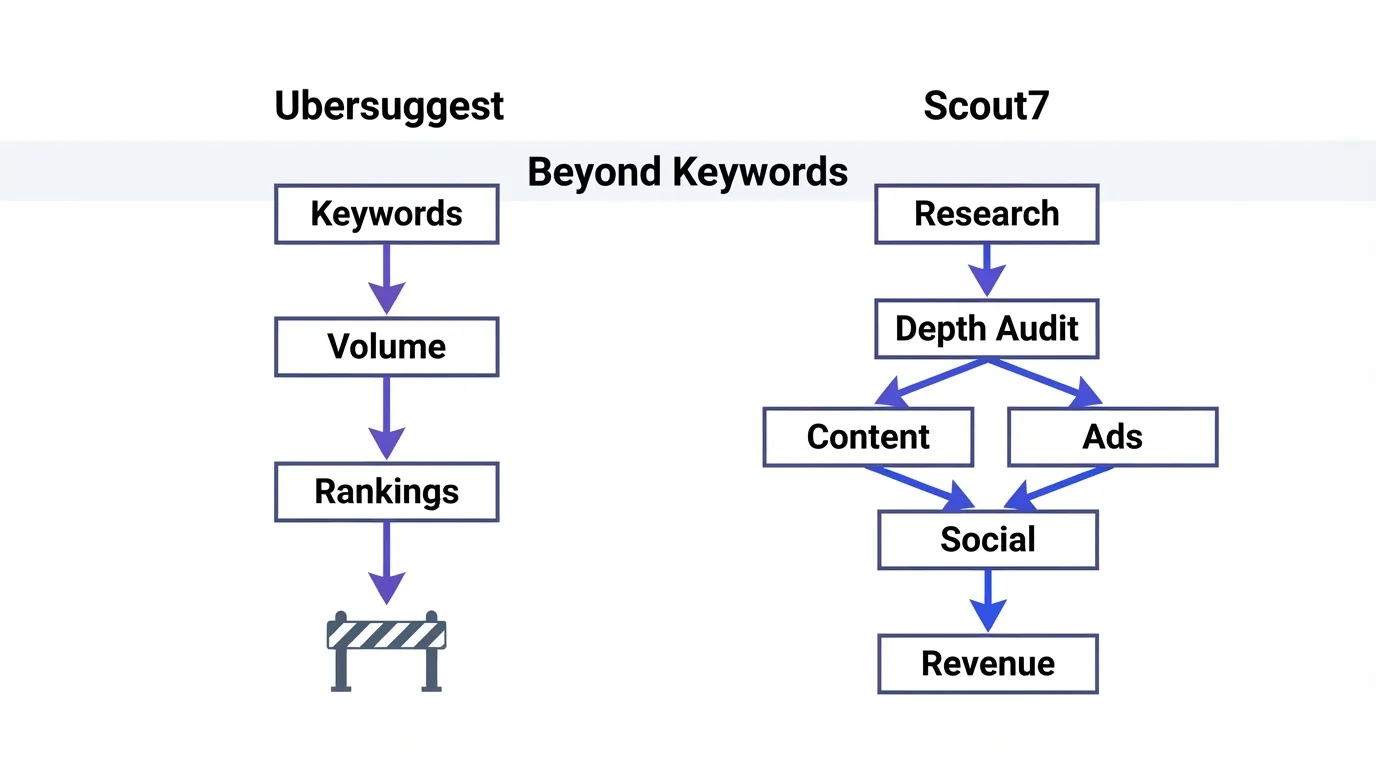
You open Ubersuggest, pull a fresh keyword list, and feel productive. Then the real work starts: briefs, blog drafts, ad ideas, adverts ideas, social posts, audits, approvals, and launch tasks scattered across five more tools.
Here is the short answer: Ubersuggest still helps with keyword discovery, but Scout7 is the stronger Ubersuggest alternative for 2026 because it connects research to content depth, campaign execution, and cross-channel output in one workflow.
Keyword research did not die. It just stopped being enough.
In 2026, the edge comes from what happens after discovery:
- Find demand fast with keyword data and intent signals
- Audit content depth before publishing another shallow article
- Turn insights into assets across blogs, ads, and social posts
- Launch faster without handoffs between disconnected tools
- Track what compounds instead of just what ranks temporarily
That shift matters because search behavior is changing, and lean teams do not have time to glue systems together by hand.
The Keyword Trap: Why Ubersuggest Isn’t Enough
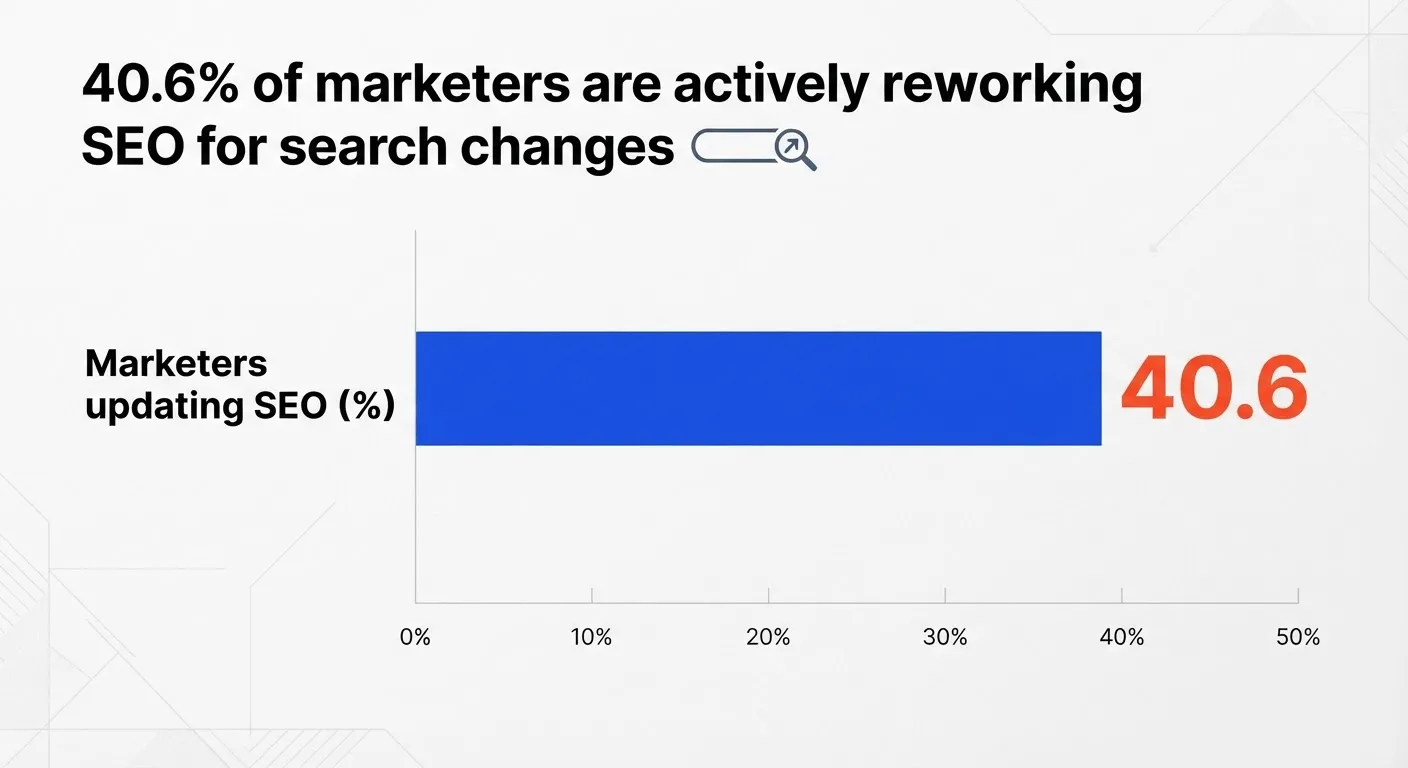
Ubersuggest is useful, but keyword-first SEO can trap teams in volume chasing. It helps you find topics, yet it does not prove whether your site covers those topics with enough depth to win in AI-shaped search.
That gap is getting harder to ignore. According to HubSpot’s Marketing Industry Trends Report, about 4 in 10 marketers (40.6%) say updating SEO for search changes is a top trend in 2026.
- Volume is a starting signal for interest, not proof of authority
- Keyword expansion creates bloat when every term becomes another thin article
- Discovery-only tools stop early and leave strategy decisions to the team
- SERP visibility is less stable when AI answers summarize weak content away
- Authority now requires depth across clusters, comparisons, FAQs, and evidence
More keywords can increase output, but they do not automatically increase trust.
If your process ends with a list, your team still has to guess what deserves content, what needs updating, and what should become a campaign.
Scout7 vs. Ubersuggest: A Feature Breakdown
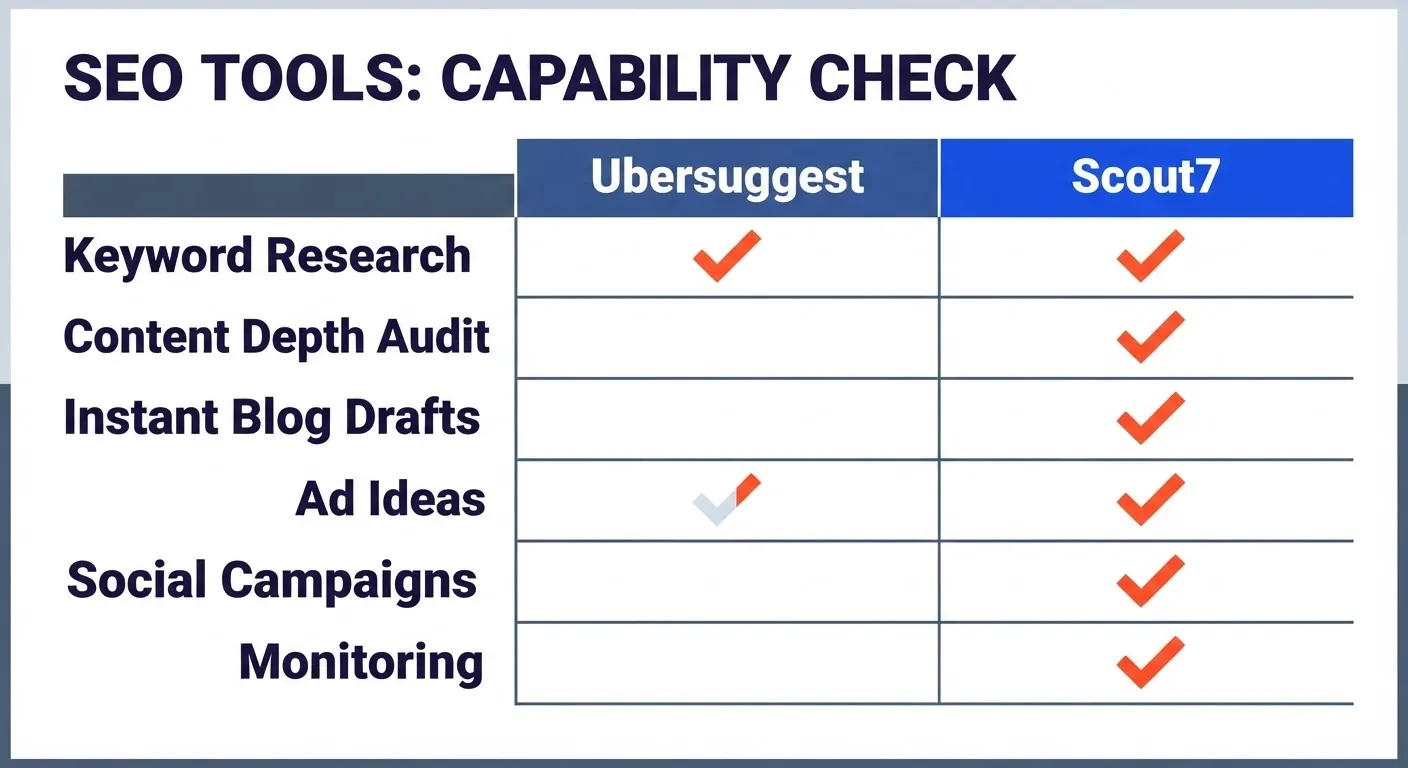
The biggest difference is simple: Ubersuggest helps teams discover demand, while Scout7 helps them act on it. For small teams, that workflow difference is often the difference between insight and execution.
I have seen this bottleneck firsthand on lean marketing teams. We could find keywords in minutes, but then spent days moving from research to briefs to drafts to paid creative to monitoring, which is exactly why an integrated system matters as AI-agent workflows become practical.
That pressure is only growing. Gartner’s 2026 survey on AI marketing automation found marketing leaders expect AI-driven automation to rise from about 1 in 6 tasks (16%) in 2026 to more than 1 in 3 (36%) by 2028.
- Ubersuggest: keyword ideas, SEO suggestions, competitor snapshots
- Scout7: research, content production, site depth audits, social outputs, and campaign activation
- Ubersuggest: supports early-stage discovery well
- Scout7: supports the full path from insight to shipped marketing assets
- Ubersuggest: another dashboard to check
- Scout7: a workflow hub built for execution across teams
In other words, Scout7 fits where marketing is heading, not just where SEO started.
From Research to Revenue: The Multi-Channel Advantage
A keyword only creates business value when it becomes content, creative, distribution, and feedback. Scout7 is built around that chain, which matters more than ever for teams asked to do more with fewer tools.
Scout7 connects research to execution across channels:
- Turn search insights into blogs with clear intent and structure
- Generate ad ideas fast for Google, Meta, LinkedIn, and Reddit
- Create adverts ideas that align with the original keyword theme
- Publish social content without rewriting the same message from scratch
- Monitor performance loops so campaigns inform the next content move
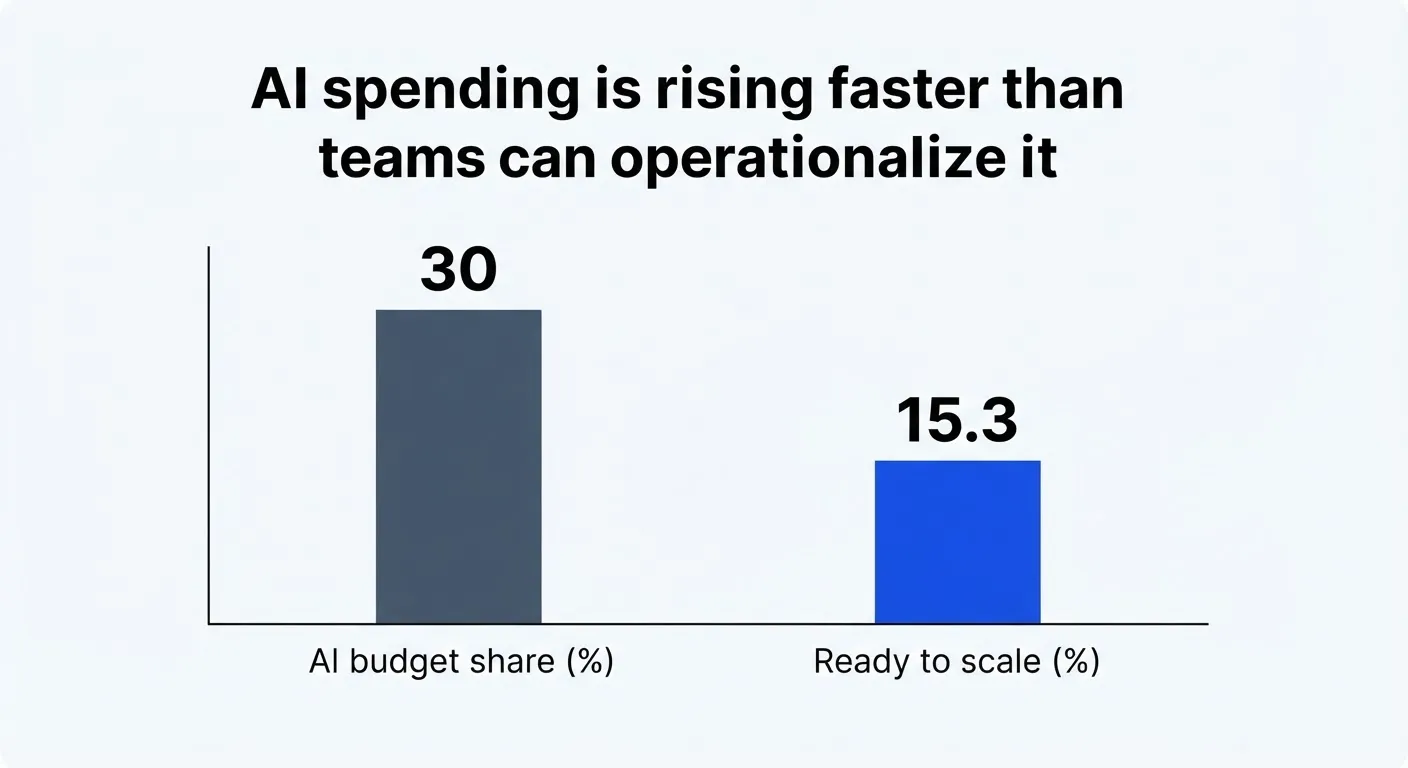
That bundled approach matches current budget reality. According to Gartner’s 2026 CMO Spend Survey, CMOs now allocate about 15% of marketing budgets (15.3%) to AI, yet only 3 in 10 organizations (30%) say they are ready to scale those capabilities.
Buying AI is easy. Building a clean workflow around it is the hard part.
That is why separate SEO, content, and ad tools often create more friction than lift.
Building Authority in the Age of AI Search
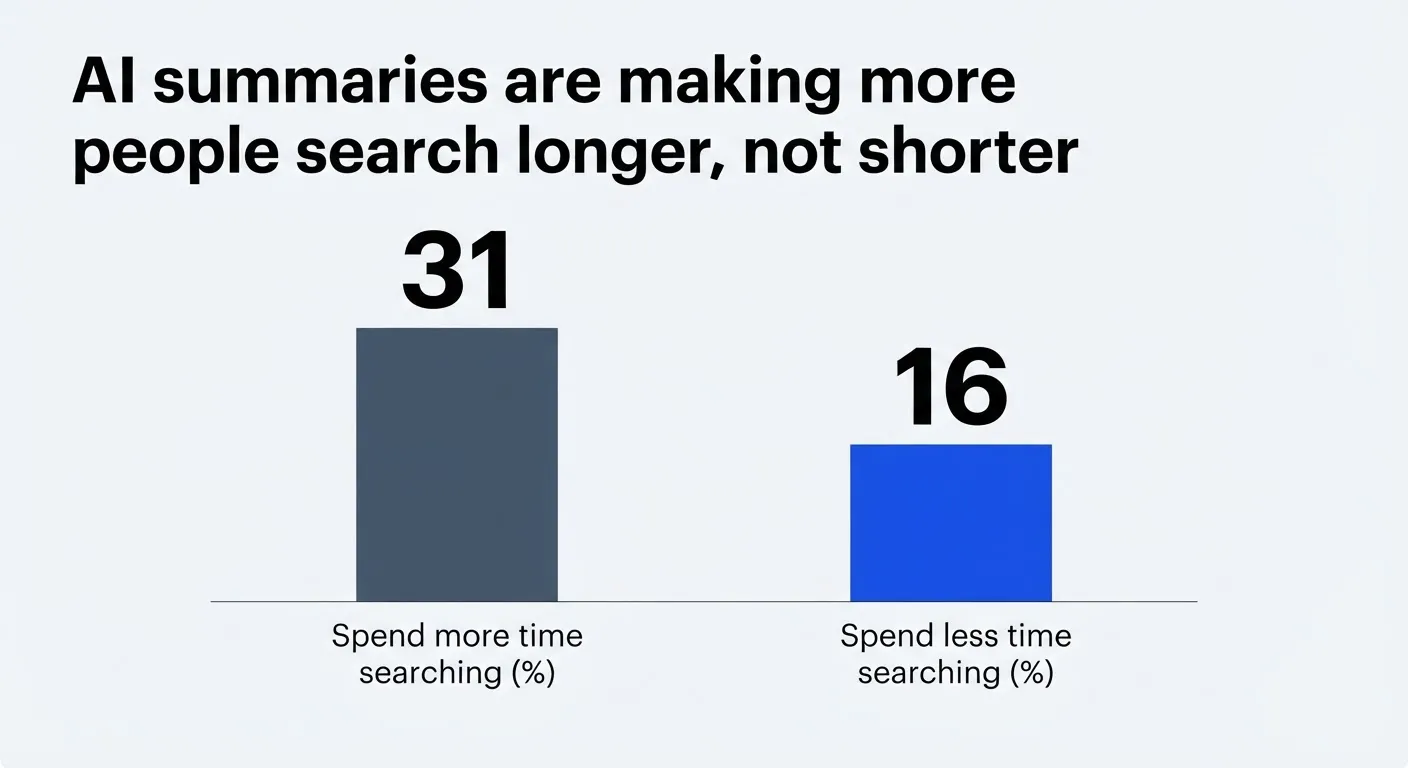
The new SEO test is not just whether you rank. It is whether your page adds enough depth, clarity, and original perspective to beat the summary and earn the click.
That standard is rising because users do not stop researching when AI appears. According to Gartner’s consumer survey on AI and search, about 3 in 10 consumers (31%) say AI summaries make them spend more time searching, while only about 1 in 6 (16%) spend less time.
To improve content depth for SEO, teams should use keywords to guide stronger pages:
- Match intent first instead of forcing one article per term
- Add original perspective that AI summaries cannot easily imitate
- Use evidence and comparisons to support claims and decision-making
- Expand FAQs naturally around real objections and next-step questions
- Audit thin coverage sitewide so clusters feel complete, not fragmented
Scout7 is stronger here because it does not just surface opportunities. It helps teams evaluate whether they have earned authority on the topic.
The Bottom Line for Lean Marketing Teams
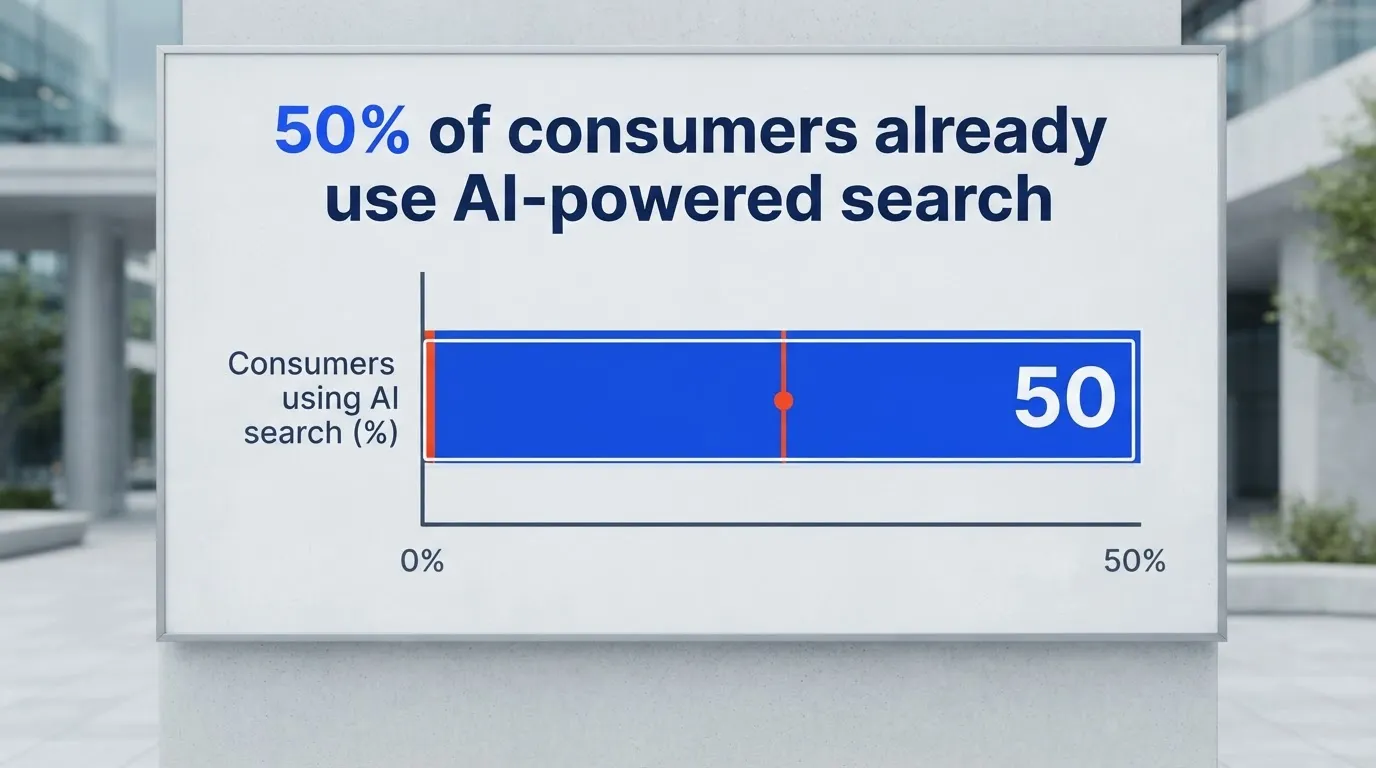
If Ubersuggest helps you discover demand, Scout7 helps you do something with it. That is the core difference, and in 2026 it is the one that matters most.
Consumer behavior already shows why execution speed matters. A recent McKinsey analysis of AI search behavior reports that half of consumers (50%) already use AI-powered search.
Here is the practical takeaway for lean teams:
- Start with keyword data to identify demand and intent
- Audit for depth next before publishing another shallow page
- Build assets from one source across content, ads, and social
- Shorten the workflow so insight turns into live campaigns faster
- Choose systems, not silos because disconnected tools slow revenue work
Scout7 wins as a Ubersuggest alternative because it reflects how modern marketing actually happens. Research is only the starting line. Growth comes from turning that research into authoritative content, ready-to-run campaigns, and a tighter operating system for your team.
If your team is tired of exporting keyword lists and stitching the rest together manually, that is your signal. Use Scout7 to move from search insight to content depth, ad creation, distribution, and monitoring in one place. The teams that grow in 2026 will not be the ones with the biggest keyword spreadsheet. They will be the ones that execute fastest, publish with more authority, and connect every insight to revenue.
References
- HubSpot Blog Marketing Industry Trends Report
- Gartner Survey Finds Only One-Third of Consumers Say GenAI Rivals Search Engines; Marketers Must Optimize for Both AI-Driven and Traditional Search
- Gartner Survey Reveals Marketing Leaders Expect AI Automation of Marketing Work to Double to 36% by 2028
- McKinsey: New Front Door to the Internet — Winning in the Age of AI Search
- Gartner 2026 CMO Spend Survey Finds CMOs Allocate 15.3% of Marketing Budgets to AI but Only 30% Are Ready to Scale AI Capabilities