
blog
The Death of Keyword-First SEO: Why More Content Loses in AI Search
July 23, 2026 · 6 min read · Scout7
Keyword volume alone won't win in 2026. Learn why deep, original, AI-assisted content earns visibility in AI search and high-intent traffic.
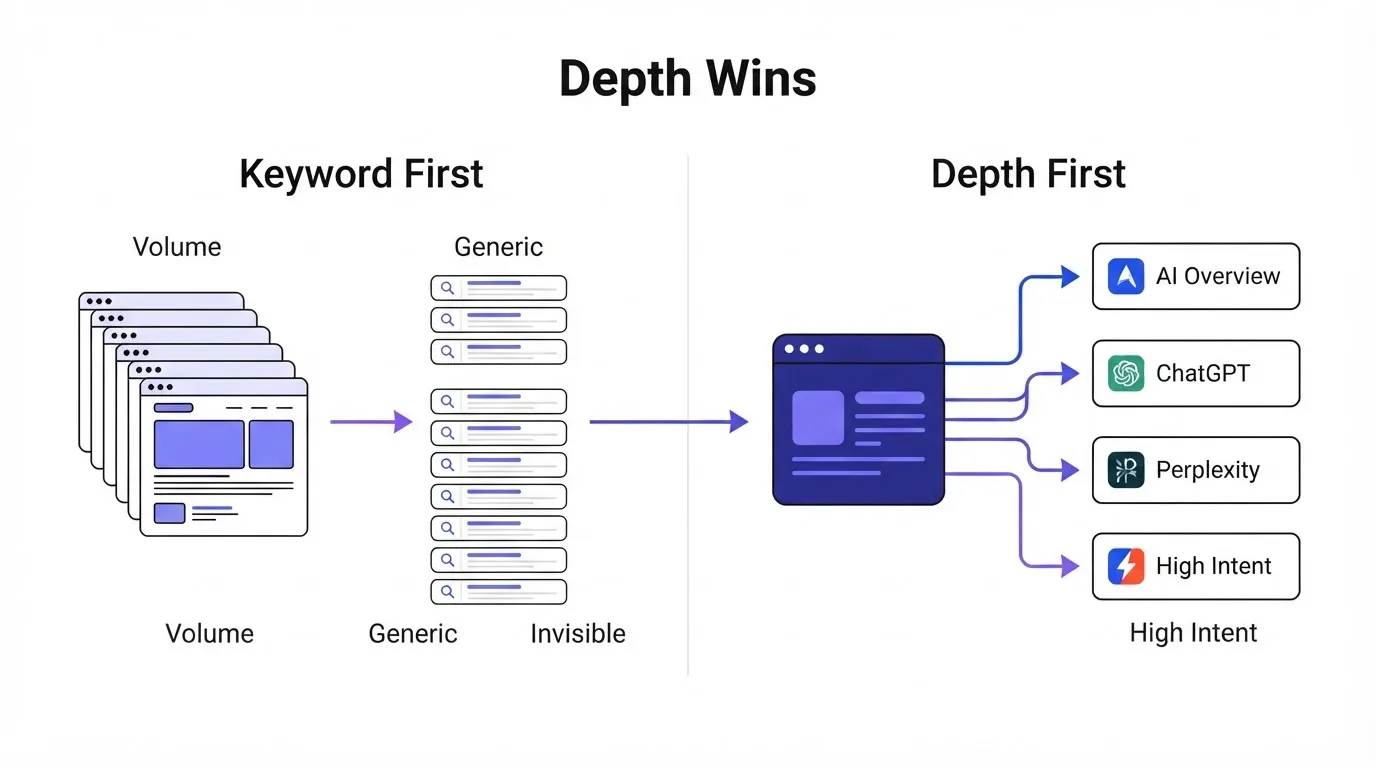
You publish another keyword page, hit optimize, and watch it disappear beneath AI summaries that already answered the question. In content strategy 2026, more content loses when it repeats what every other page says, because AI search rewards specific, useful, and experience-backed answers.
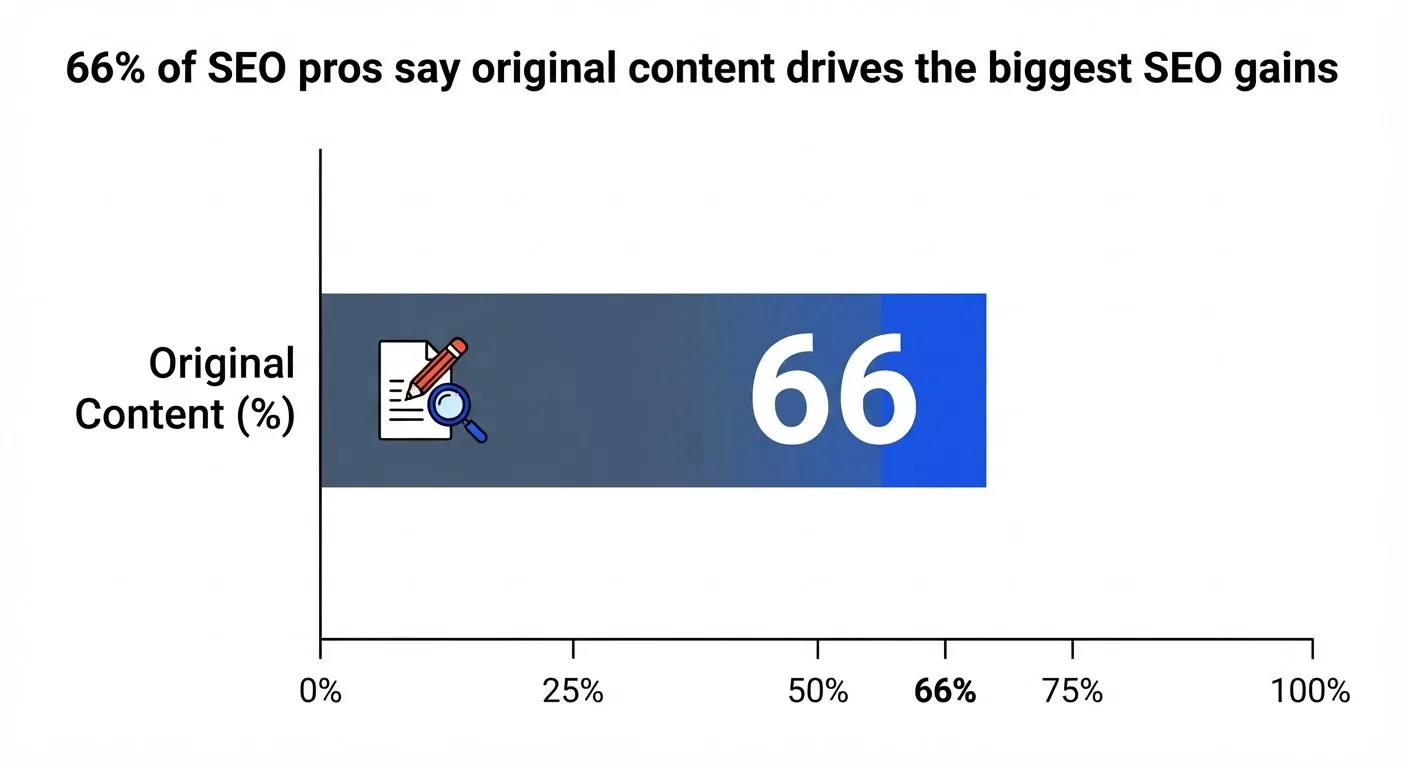
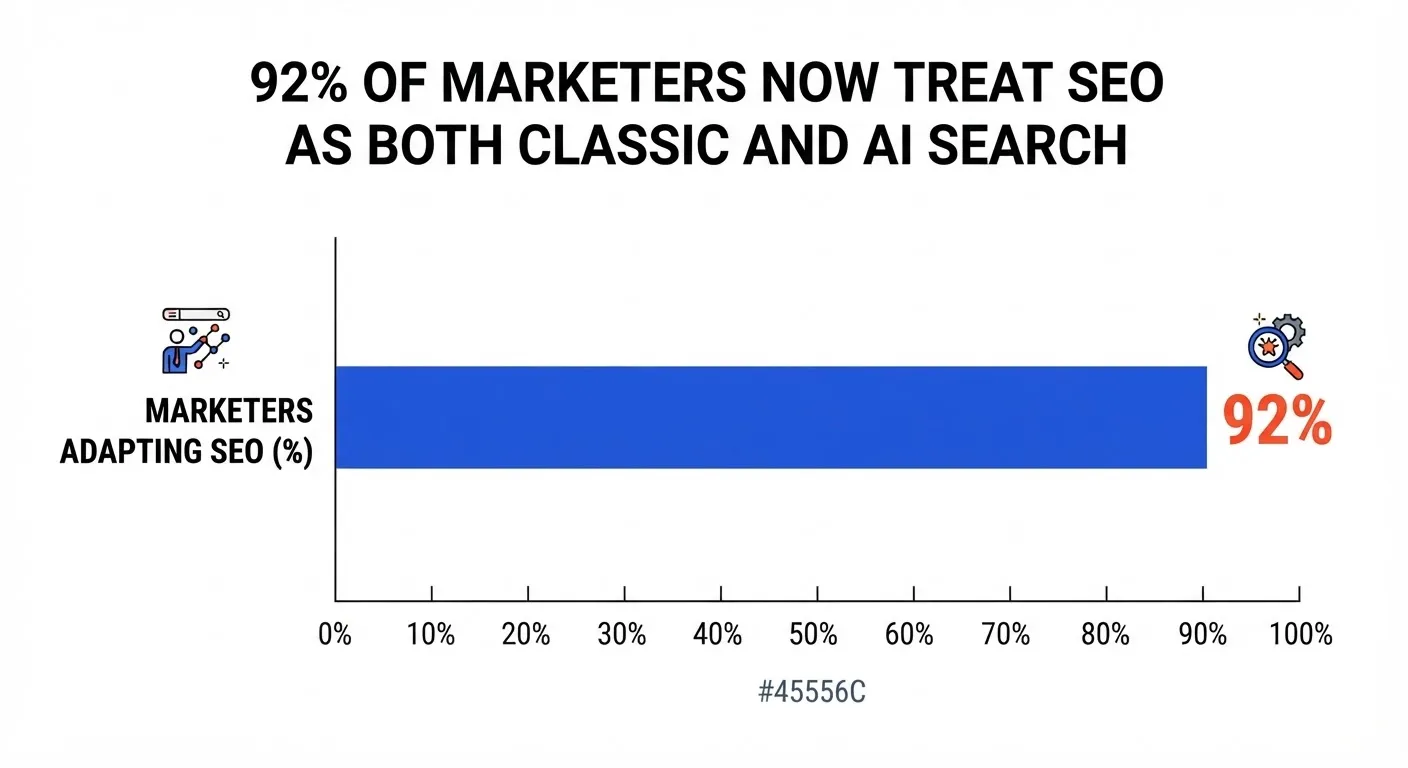
That shift is already measurable. According to Search Engine Journal, about two-thirds of SEO professionals (66%) say original content has the biggest positive impact on SEO, while HubSpot marketing statistics show more than 9 in 10 marketers (92%) already use or plan to use SEO for both traditional and AI-powered search in 2026.
This is the real break from the old playbook.
- Keyword coverage still matters for finding demand
- Intent now matters more than exact-match phrasing
- Depth beats repetition when AI systems choose what to surface
- Speed still matters because fresh answers win attention
- Point of view matters because generic summaries are easy to replace
The new SEO question is not “How many pages can we publish?” It is “What can only our brand explain well?”
The Death of the Keyword-First Strategy
Keyword-first SEO is fading because AI engines synthesize answers before a click happens. If your page exists only to mirror a query, the model can absorb it and move on.
Search Engine Journal makes the signal clear: about two-thirds of SEO professionals (66%) say original content drives the strongest SEO impact. That matters because originality gives AI systems a reason to cite, summarize, or recommend your page.
- Keywords are clues to audience demand, not the full content plan
- Thin pages are easier to ignore when AI can summarize them instantly
- Repetition creates no advantage if ten competitors say the same thing
- Intent-led pages perform better because they solve the real job behind the search
- Specificity wins visibility in AI Overviews, chat interfaces, and assistants
For brands collecting ad ideas or adverts ideas, the same rule applies.
A list of recycled tactics is forgettable. A page that explains which ideas work for a specific funnel stage, budget, and audience becomes useful.
What 'Depth' Actually Means for DTC and SaaS Brands
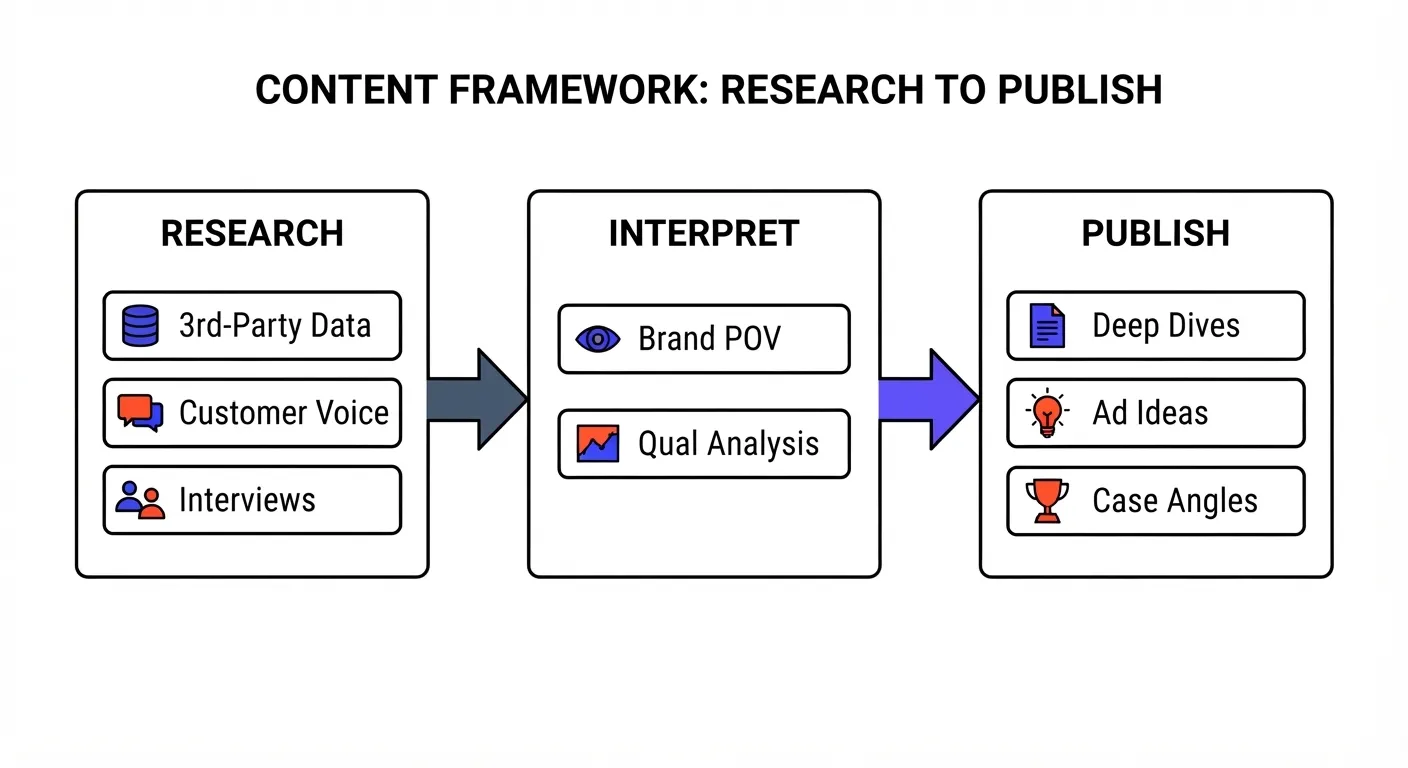
Depth does not mean every team needs a proprietary survey, lab, or data science unit. It means your content adds insight that a generic AI summary cannot assemble on its own.
At Scout7, that middle ground is the practical one. We have seen small SaaS and DTC teams create stronger content by combining AI-powered research, customer language, campaign examples, and lived brand context into one sharp recommendation set, and that approach aligns with Adobe’s 2026 AI digital trends report, where more than three-quarters of executives and CX practitioners (76%) reported moderate-to-significant improvement in content ideation and production from generative AI.
- Evidence plus interpretation creates defensible depth
- Customer language reveals intent better than keyword tools alone
- Third-party research adds credibility fast
- Campaign examples turn theory into action
- Brand experience gives the page a clear point of view
This is the workable formula for content strategy 2026.
You do not need original research every time. You need original thinking on top of strong inputs.
The New Discovery Channels Are Already Sending Buyers
This shift matters now because discovery no longer starts and ends on the blue-links page. Buyers increasingly arrive after an AI system has already narrowed the options.
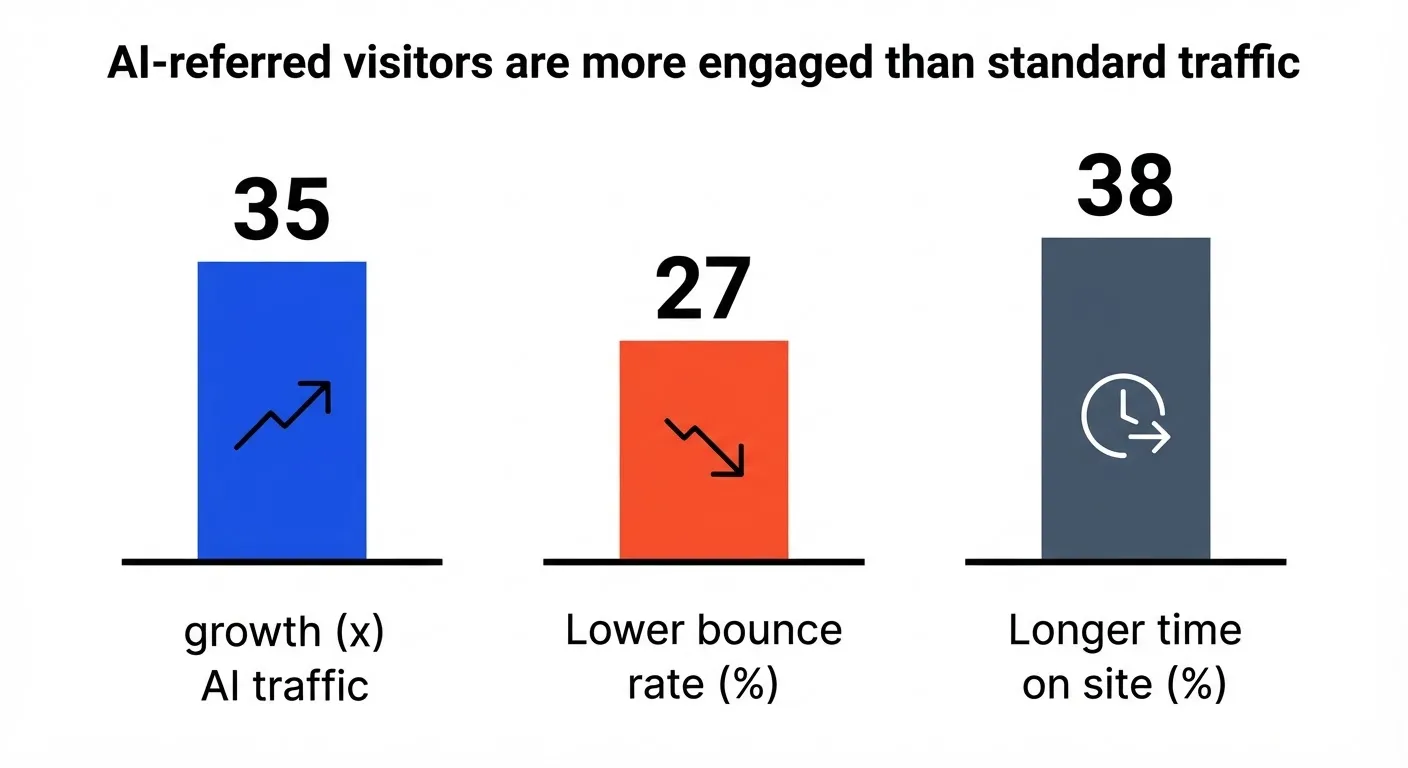
Adobe’s Q2 traffic analysis found that AI referral traffic to U.S. retail sites grew 35 times by May 2025, with bounce rates 27% lower and time spent per visit 38% longer than non-AI traffic. That is not curiosity traffic. That is pre-qualified attention.
A practical pattern shows up fast.
A lean team asks for ad ideas, prompts three tools, and gets the same safe list everyone else gets. Then they layer in customer objections, product positioning, and past winning hooks, and suddenly the content becomes something an AI assistant can cite because it is narrower, more actionable, and more buyer-ready—exactly the kind of higher-intent behavior Adobe’s findings point to.
- AI referrals are growing fast across discovery surfaces
- Visitors arrive warmer because the answering step happened upstream
- Engagement runs deeper with lower bounce and longer sessions
- Visibility now spans Google, ChatGPT, Perplexity, Claude, and retail assistants
- High-intent clicks reward brands with clearer, more useful pages
Operationalizing Depth Without Building a New Team
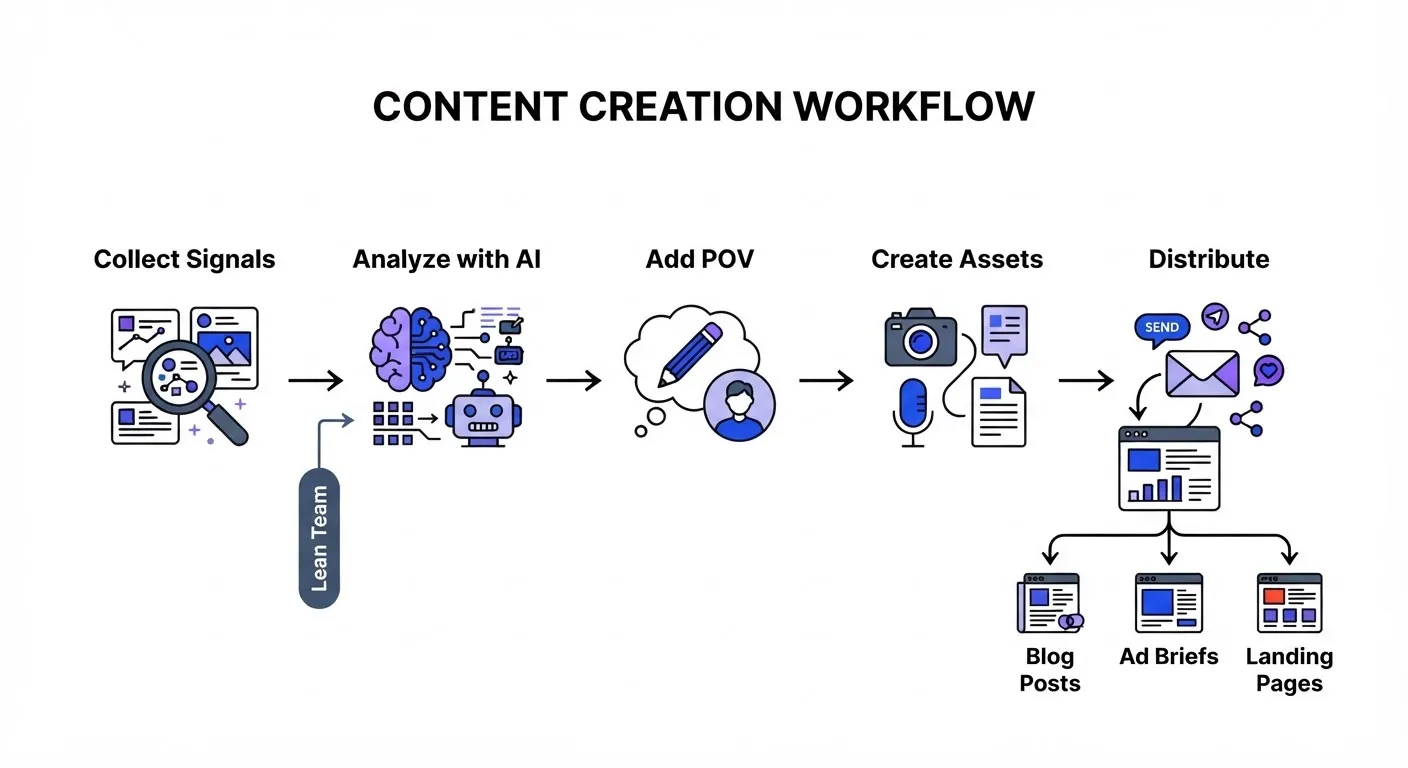
Most small teams do not need another strategy memo. They need a system that turns scattered inputs into publishable, high-depth content without adding a new layer of work.
That operational gap is larger than many teams admit. According to Salesforce’s State of Marketing 2026, more than 8 in 10 marketers (84%) still run generic campaigns, which shows how often execution defaults to broad messaging instead of tailored insight.
For Scout7, this is where the workflow matters most.
Small SaaS and DTC teams rarely have spare hours to stitch together prompts, research docs, content briefs, and performance notes across five separate tools. The better move is an all-in-one system that centralizes research, extracts usable insights, and turns them into campaigns and content quickly.
- Custom AI workflows add overhead most lean teams cannot support
- Fragmented tools slow output and weaken consistency
- Centralized research speeds decisions across content and creative
- Built-in interpretation helps teams move from data to messaging
- Faster iteration creates depth at scale without bloated headcount
That is how smarter systems create room to beat generic campaigns.
What Winning Content Strategy Looks Like in 2026
Winning content strategy 2026 starts with demand signals, but it does not stop at keyword volume. The job is to answer the underlying problem better than a generic AI summary can.
The market is already moving there. HubSpot marketing statistics report that more than 9 in 10 marketers (92%) already use or plan to use SEO for both traditional and AI-powered search engines in 2026, while Search Engine Journal shows about two-thirds of SEO professionals (66%) prioritize original content impact.
So what does a winning model look like?
- Start with intent rather than just volume
- Use keywords as inputs for topic selection, not page formulas
- Add evidence and interpretation to make content citable
- Move fast with AI assistance but keep human judgment central
- Build repeatable workflows so depth does not depend on heroics
This is also how teams turn ad ideas and adverts ideas into differentiated assets instead of commodity lists.