
comparison
75% Use AI, 84% Still Ship Generic Campaigns — Why Ideation Tools Are Failing Lean Teams
July 24, 2026 · 7 min read · Scout7
Most small teams don't have an AI problem. They have an execution problem. See why ideation tools fall short and what to use instead.
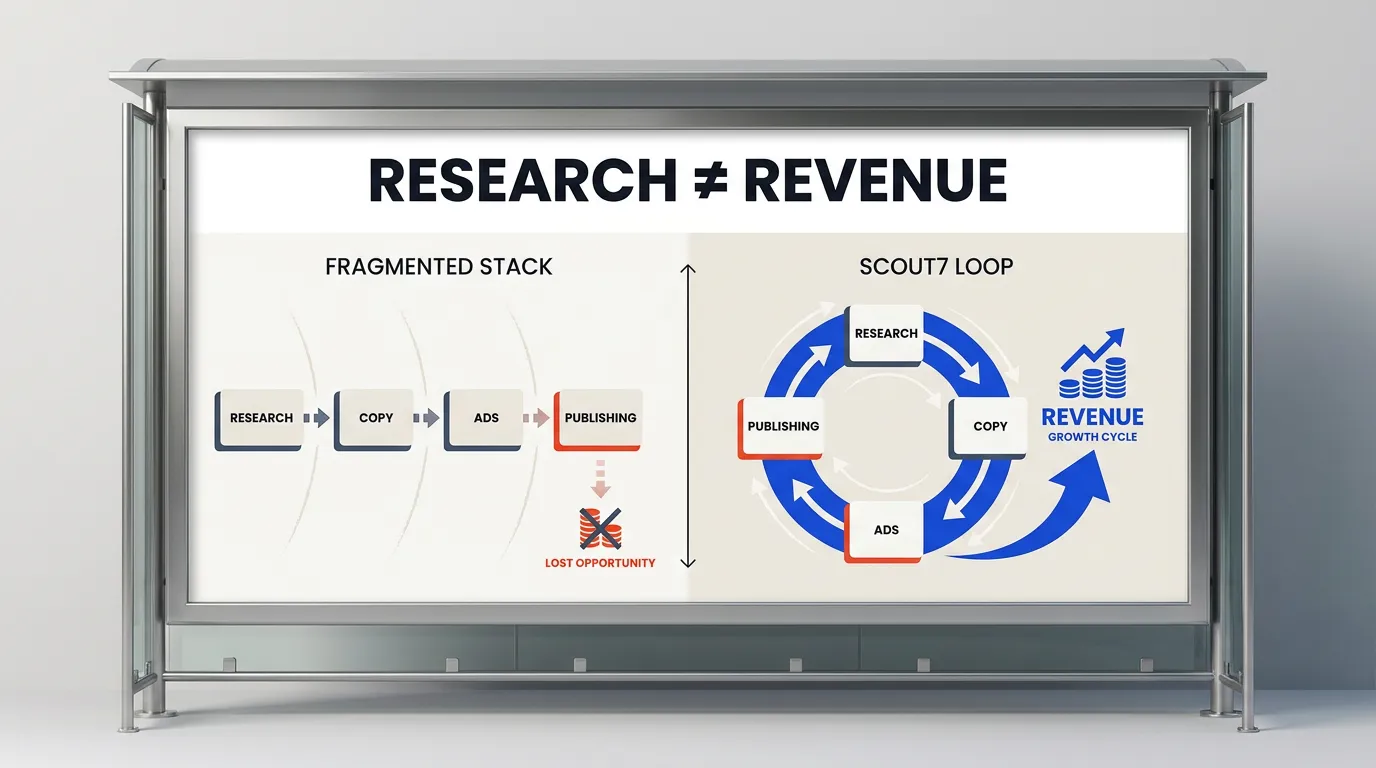
You open one tool for keywords, another for briefs, another for copy, another for creatives, and another for scheduling. By the time the campaign is ready, the moment that made it relevant has already passed.
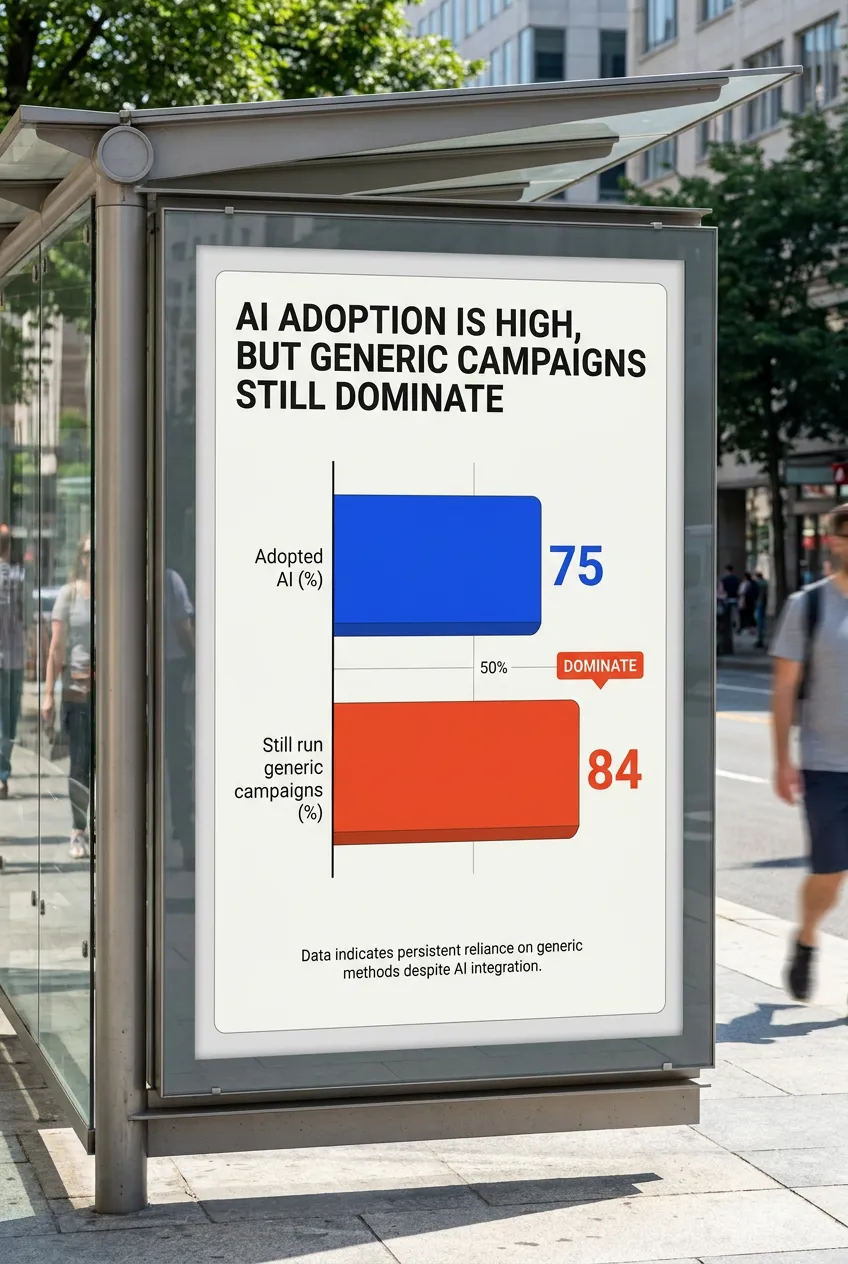
That pattern is why marketing automation for small teams now matters more than raw AI access. According to Salesforce’s State of Marketing 2026, three in four marketers (75%) use AI, yet more than eight in ten (84%) still run generic campaigns.
- The problem is not idea scarcity for lean teams with too many tools
- The real bottleneck is execution habit after the research phase ends
- Most AI workflows stop too early at prompts, outlines, and keyword lists
- Small teams pay the handoff tax every time context leaves one platform
AI is not failing small teams at ideation. Small teams are failing by treating ideation as the finish line.
The Tool Fatigue Trap
The first slowdown rarely comes from the market. It usually comes from the stack the team built to keep up with the market.
I have seen the same pattern repeat: a founder gets a great keyword insight in one tab, pastes it into a doc, rewrites it in a copy tool, sends notes into a design tool, then waits on publishing. That is not a software shortage. That is an execution habit built around fragmentation.
- Five-plus subscriptions create drag across research, SEO, writing, design, and scheduling
- Each handoff strips context from audience nuance, offer framing, and brand voice
- Teams confuse collecting insight with shipping because dashboards feel like progress
- Lean teams lose speed first and consistency second when tools do not share context
- According to Salesforce’s State of Marketing 2026, three in four marketers (75%) have adopted AI
- The same Salesforce research found more than eight in ten marketers (84%) still run generic campaigns
That gap says a lot. Teams are not short on inputs. They are short on operational follow-through.
The Research-to-Execution Gap
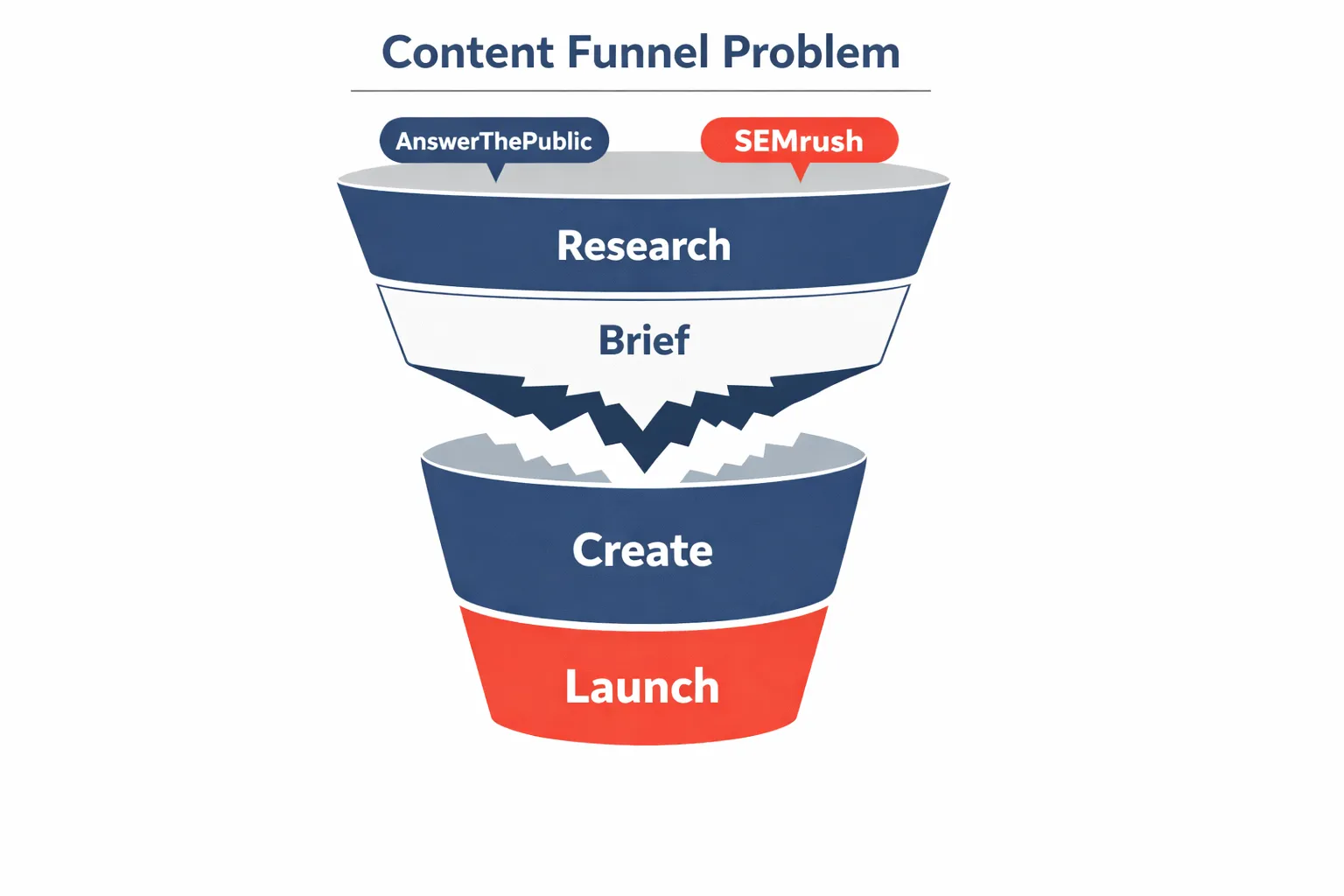
Research tools are useful until the work has to become publishable. That is where the gap opens.
Tools like AnswerThePublic and Semrush can surface demand, questions, and keyword opportunities. But they do not usually turn those findings into brand-safe posts, ad variants, landing page angles, and channel-ready publishing without more human stitching.
- Research tools stop at insight instead of carrying work into deployment
- Someone still has to translate findings into briefs, copy, assets, and approvals
- Every extra step slows relevance when attention windows are shrinking
- According to Adobe’s Digital Trends report, half of surveyed customers say brands have only two to five seconds to capture interest in emails, ads, and social posts
- That short window punishes slow teams more than under-informed teams
If a keyword insight takes three meetings to become a campaign, it is already weaker than it looked in the dashboard.
This is why the comparison matters in an AI marketing agent vs keyword tools discussion. One helps you discover what people want. The other helps you act before the window closes.
The Unified Brand Brain Advantage
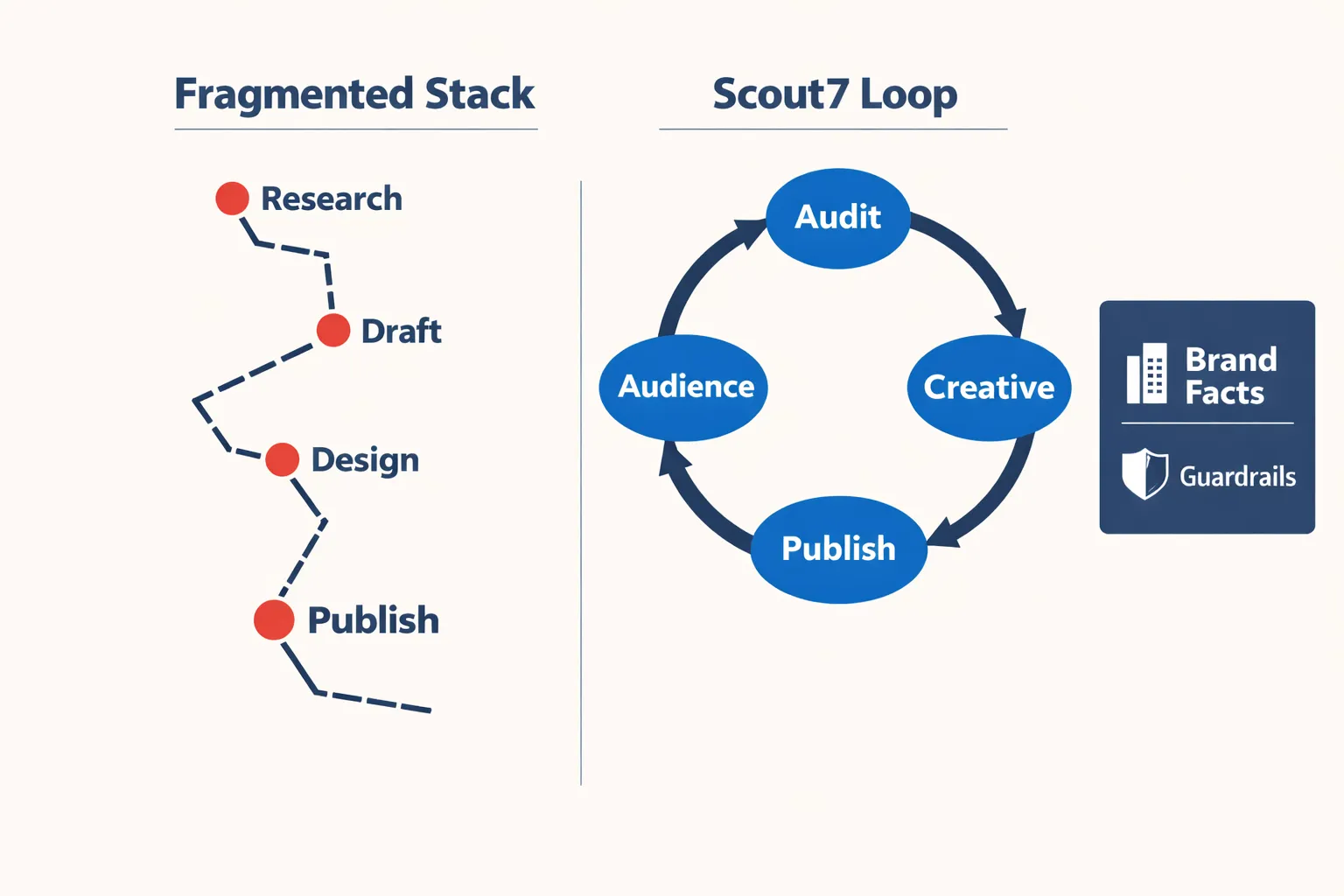
The fastest teams do not just generate more content. They reduce the number of times context has to be rebuilt.
When audience insight, brand rules, and execution live in one place, teams spend less time re-explaining the same business. That operational setup matters more than flashy prompts because speed without guardrails creates cleanup work.
- According to Salesforce’s State of Marketing 2026, marketers with satisfactorily unified data are about 42% more likely to regularly respond to customers than peers unhappy with their data foundation
- Unified context reduces rework across copy, creative, and publishing decisions
- Brand Facts act as a memory layer so claims stay grounded instead of invented
- Onboarding guardrails enforce compliance rules across copy, visuals, and ad messaging
- Operational flow beats isolated ideation when small teams need output fast
For Scout7, the advantage is practical. Audit findings can move directly into social posts, ad concepts, and execution while stored Brand Facts and onboarding guardrails keep claims and messaging aligned.
Platform Comparison: Who Does What
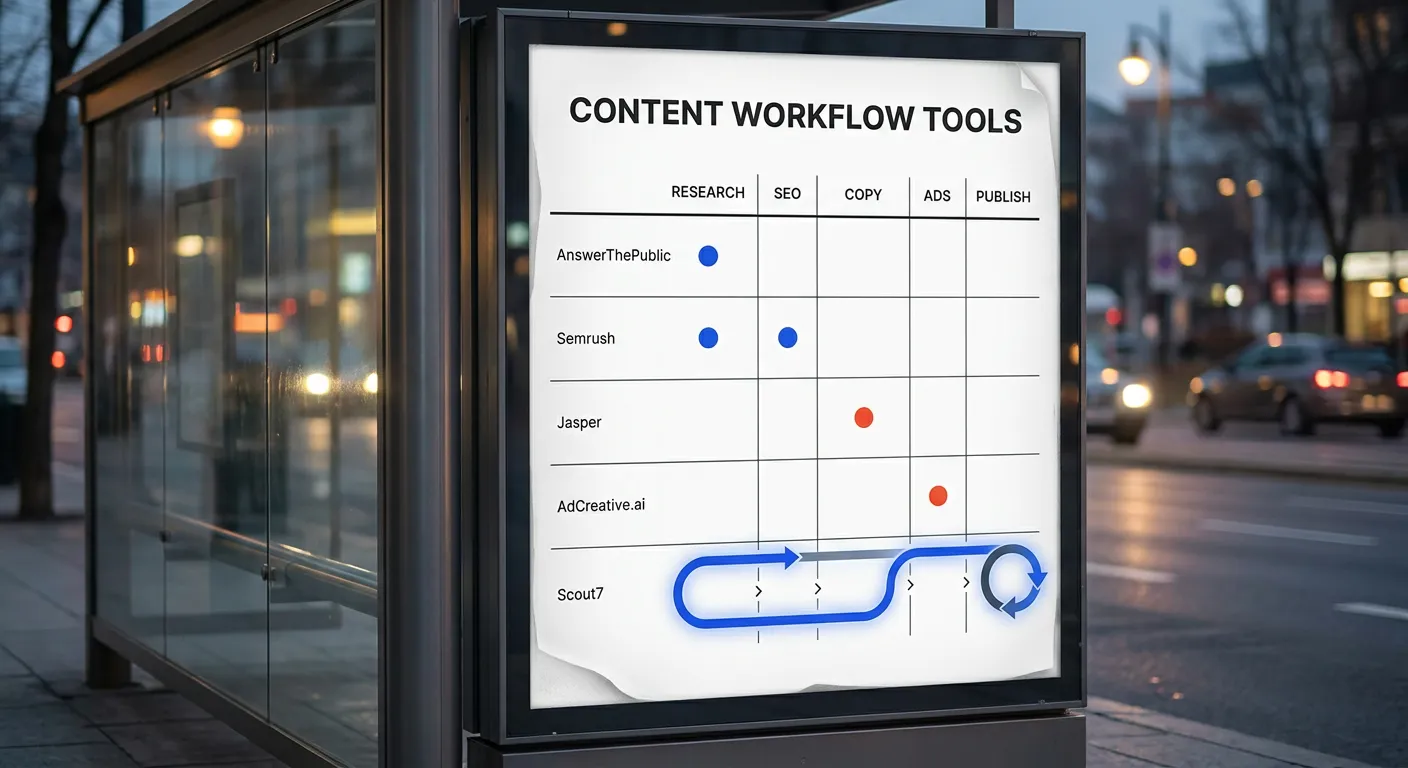
Not every AI tool belongs in the same category. The useful comparison is not “which tool is smartest,” but “where does this workflow end?”
Here is the clearest way to look at the market:
- AnswerThePublic: demand discovery and question mapping for content research
- Semrush: SEO intelligence, competitor tracking, and keyword planning
- Jasper: copy generation once strategy and inputs already exist
- AdCreative.ai: ad asset generation focused on creative output layers
- Scout7: research-backed execution that moves from insight toward publishing across channels
That distinction matters because the market is moving toward personalization at speed. According to HubSpot’s 2026 marketing trends report, nearly half of marketers (48.57%) said AI-powered personalized content was the top trend.
- Keyword tools reveal demand but do not complete campaigns
- Copy tools generate language but still depend on upstream context
- Creative tools make assets but do not solve strategy-to-channel orchestration
- An all-in-one marketing agent matters when the team cannot afford constant translation work
So in an AI marketing agent vs keyword tools comparison, the answer is simple: they serve different layers, and lean teams usually need the layer that finishes the job.
When to Choose Which
Point tools still make sense when a specialist owns the channel and has time to manage the handoffs. Many small teams do not.
If you already have an SEO lead, paid media operator, designer, copywriter, and clear approval flow, specialized tools can work well. If the founder is also the strategist, editor, and publisher, consolidation becomes less of a convenience and more of a survival move.
- Choose point tools when a specialist can extract full value from each platform
- Choose point tools when process discipline is already strong across the stack
- Choose an all-in-one marketing agent when one person must move from insight to live campaign fast
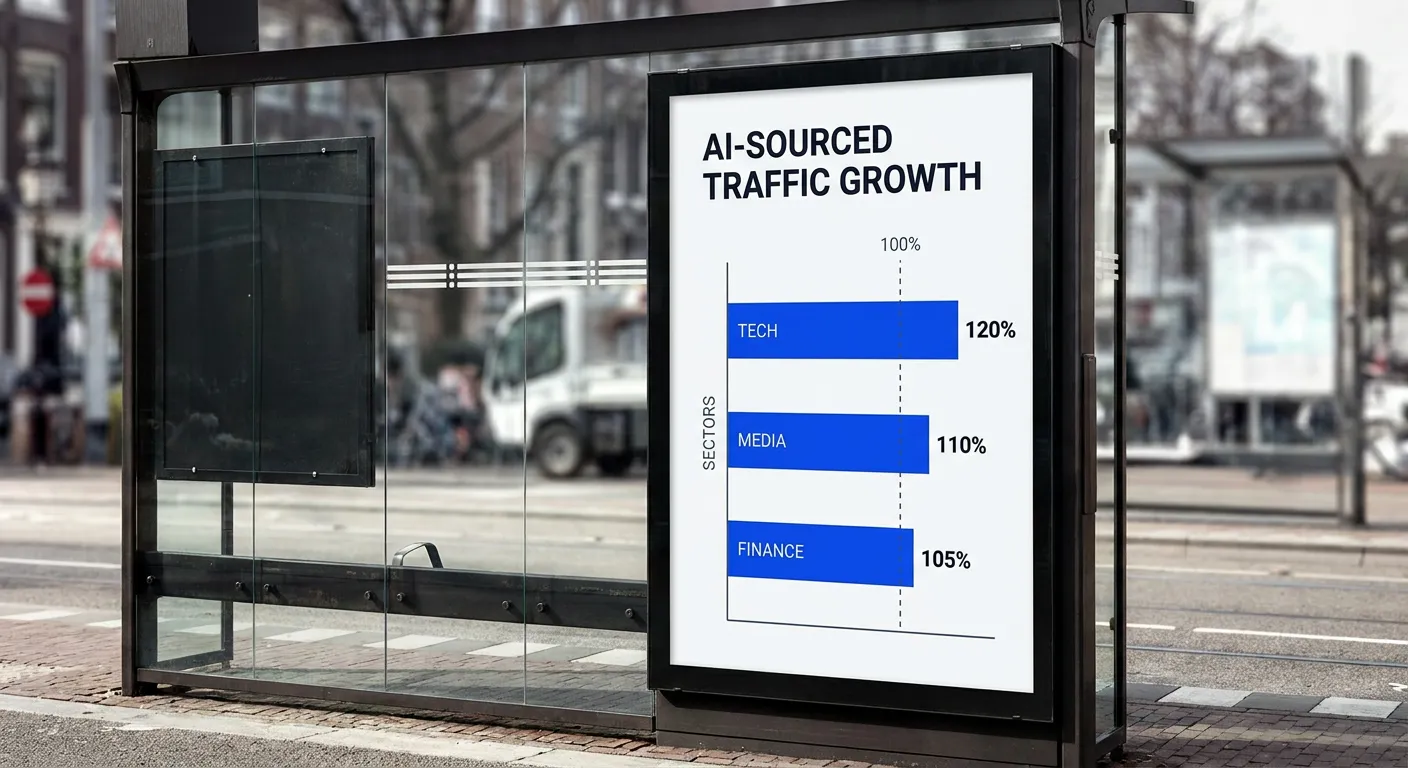
- According to Adobe Digital Insights, AI referrals grew at triple-digit rates across sectors in late 2025
- The same Adobe Digital Insights report found tech and software had the highest share of AI-driven visits
That trend raises the cost of delay. As AI-driven discovery grows, faster teams get more chances to be seen, tested, and chosen.
The Bottom Line for Small Teams
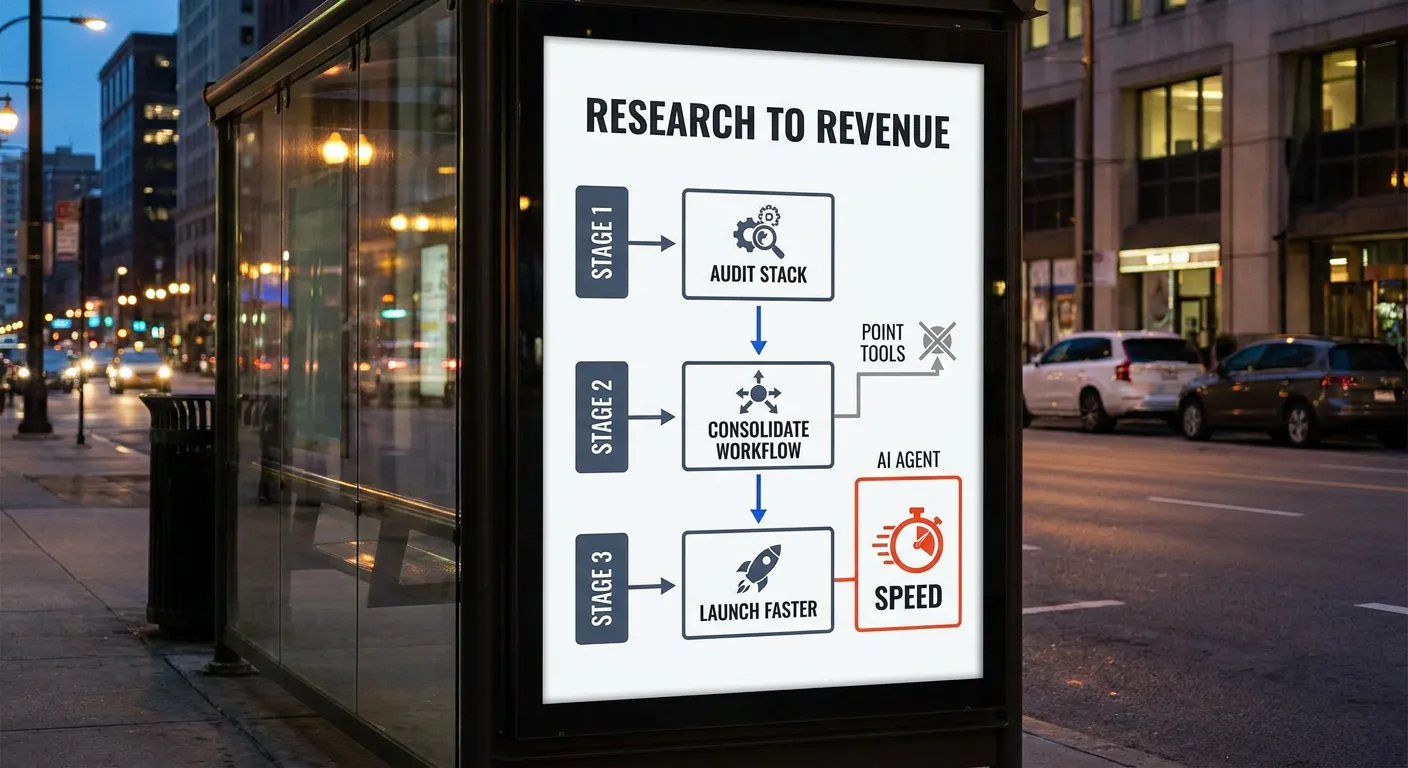
If your team still treats research, copy, creative, and publishing as separate jobs in separate tools, the market will keep outrunning your process. That is the real issue.
The strongest case for marketing automation for small teams is not convenience. It is collapse of the handoff chain so insight becomes output while brand truth and compliance rules stay intact.
- Generic campaigns persist despite AI adoption because most workflows break before execution, as Salesforce shows with 75% AI use and 84% still running generic campaigns
- Attention is brutally short with Adobe reporting two to five seconds for many promotional formats
- Personalization is now expected with HubSpot showing 48.57% of marketers prioritize AI-personalized content
- Unified systems respond faster with Salesforce finding a 42% lift in regular responsiveness among marketers satisfied with unified data
For DTC and SaaS founders, an all-in-one marketing agent is often more useful than another idea tool because execution speed is the actual constraint.
The practical takeaway is clear. If your team is drowning in tabs, stop asking which tool gives you more ideas and start asking which tool gets campaigns out the door. Scout7 is built for founders and small teams who need research-backed output, channel execution, and guardrailed brand consistency in one flow.
- Key takeaway one: the execution gap is usually a habit problem before it is a tooling problem
- Key takeaway two: keyword and ideation tools help discovery, but they do not finish the workflow
- Key takeaway three: consolidation is becoming the safest path to speed, consistency, and relevance
The teams that win next will not be the ones with the most AI tabs open. They will be the ones that can turn plain-English requests into real campaigns across channels without losing context on the way.
If you are evaluating an all-in-one marketing agent, audit your current workflow first. Count the handoffs between insight and publishing, then ask how many of them actually create value. That answer will tell you whether you need another tool or a better operating system for growth.