
blog
Stop Planning B2B SaaS by Channel: Buyers Now Cross 10 Touchpoints Before They Trust You
July 22, 2026 · 5 min read · Scout7
B2B SaaS buyers now use 10 channels to discover and validate vendors. Here’s the network to prioritize in 2026 beyond review sites alone.
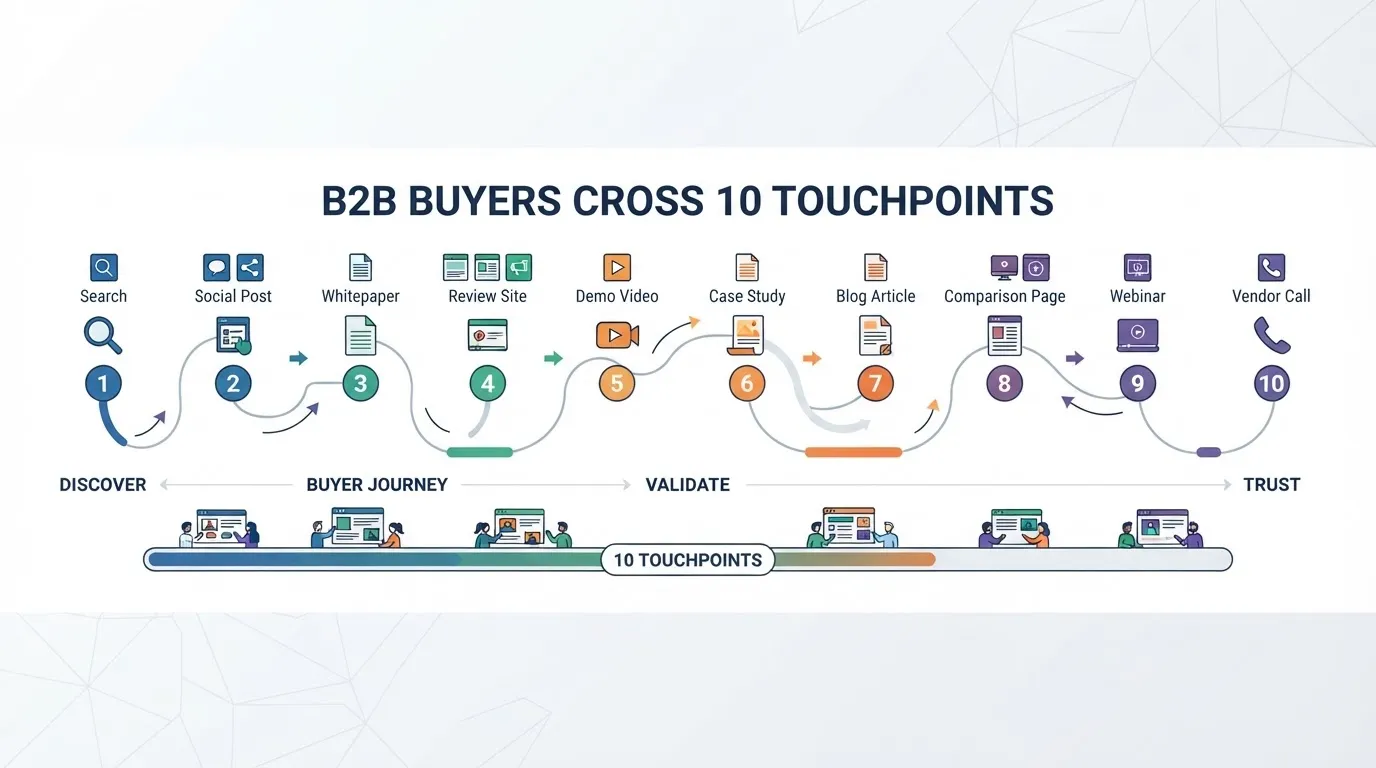
A buyer spots your brand in a LinkedIn post, later sees a paid social ad, asks an AI search summary who the category leaders are, checks G2, scans your website, and only then thinks about booking a demo. That path feels messy from the inside, but to the buyer it feels normal.
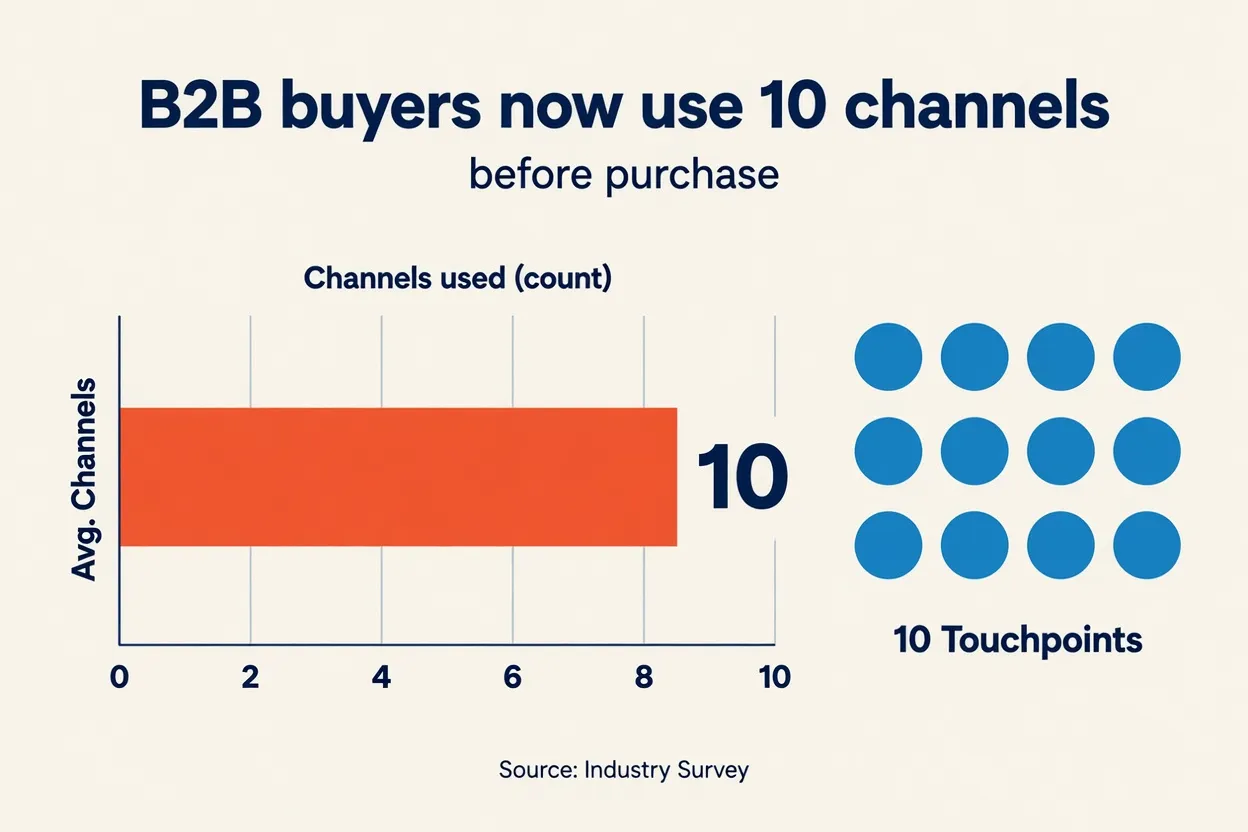
The data now matches that reality. McKinsey found that B2B buyers use an average of ten channels across the purchase journey, which means the old idea of “discover on one channel, convert on another” no longer explains how trust gets built today.¹
The old channel list is obsolete
If your growth plan still treats paid social, paid search marketing, reviews, and email as separate lanes, you are following your org chart instead of buyer behavior. That makes any digital campaign harder to measure because the buyer is stitching the experience together long before your team does.
McKinsey’s 2026 research says buyers now use ten channels on average, while Gartner reports that about three-quarters of buyers (75%) increasingly prefer self-service digital journeys.¹ ² In plain terms, buyers want to validate you before sales ever joins the conversation.
Channels still matter. Isolated channel planning does not.
The complete network B2B SaaS companies should cover
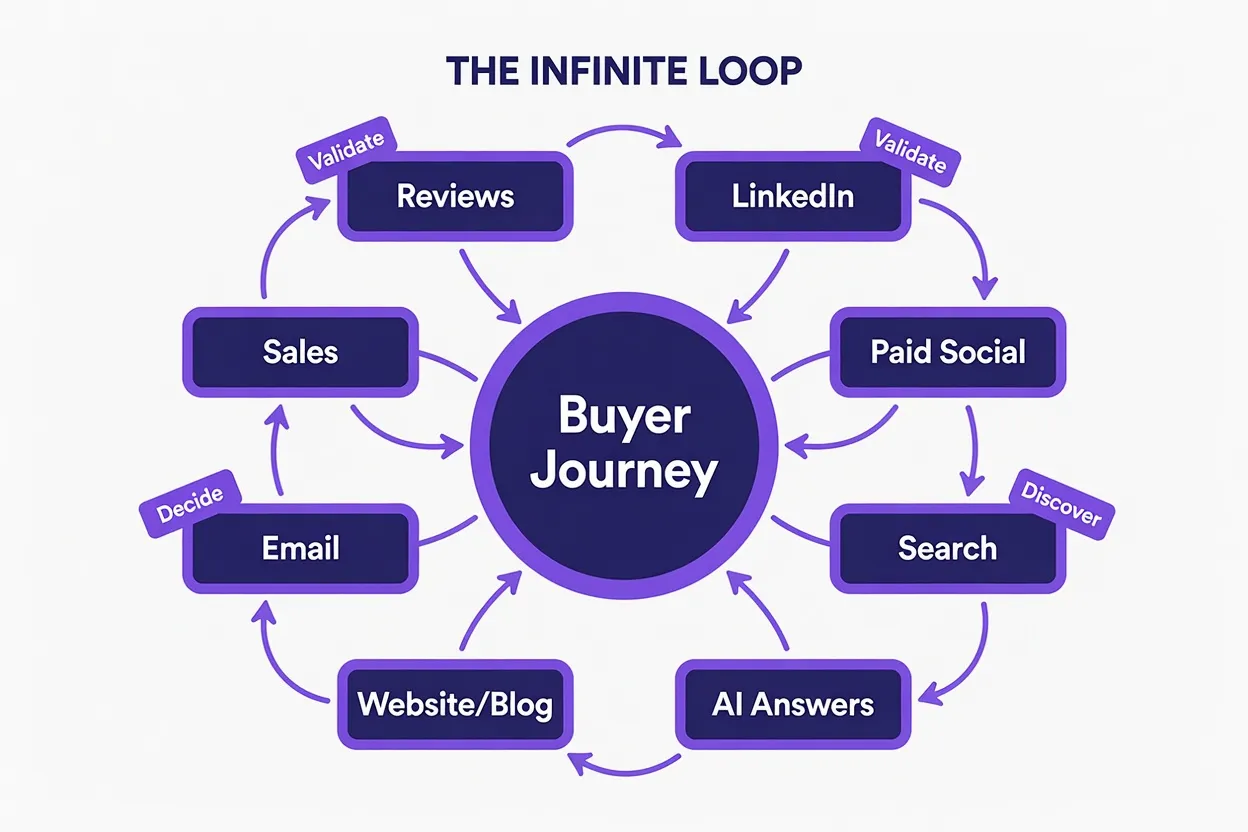
The better question for 2026 is not which channel wins. It is which trust nodes need to connect so buyers can discover, verify, revisit, and compare your brand without losing confidence.
That network usually includes a few core layers:
- Review sites that reduce shortlist risk.
- LinkedIn and paid social that create visible professional proof.
- Search and AI summaries that capture active research behavior.
- Website and blog content that explain your category and point of view.
- Email, community, partners, and sales touchpoints that keep momentum moving.
Forrester says social media now sits at the center of B2B buying and vendor validation, while Deloitte reports that nearly 3 in 10 adults (29%) in developed countries will view at least one AI-generated search summary each day by 2026.³ ⁴ That makes social proof and searchable content part of the same trust system.
Why review sites are only one layer
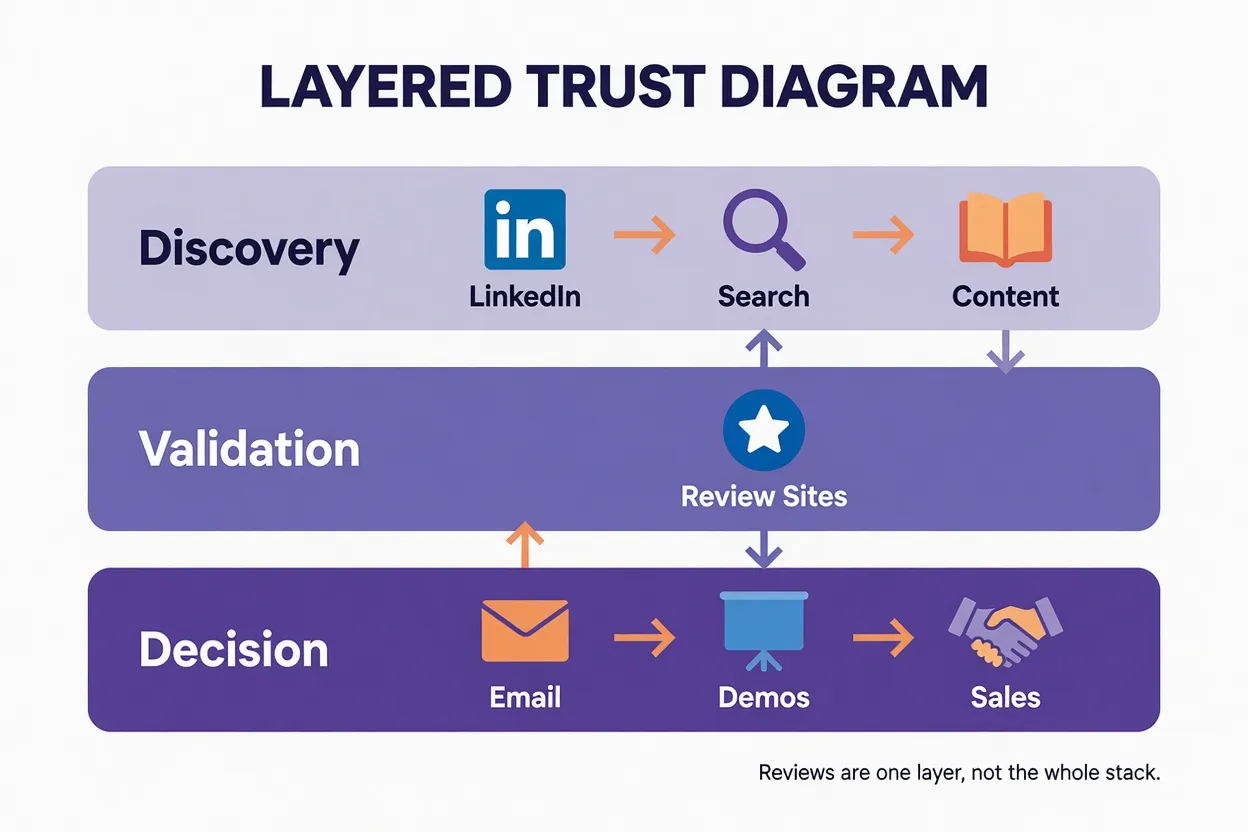
Review sites still matter because they help buyers feel safe enough to keep going. A representative buyer might first hear about you on LinkedIn, then use reviews to answer a simpler question: “Is this vendor real, credible, and worth ten more minutes of my time?”
That is why review presence matters, but not as a standalone growth engine. TrustSignals reports that nearly 8 in 10 buyers (78%) rely on customer reviews before shortlisting software vendors, and Gartner’s review-market analysis shows the landscape is consolidating around a few major destinations.⁵ ⁶
Why social and search now shape validation
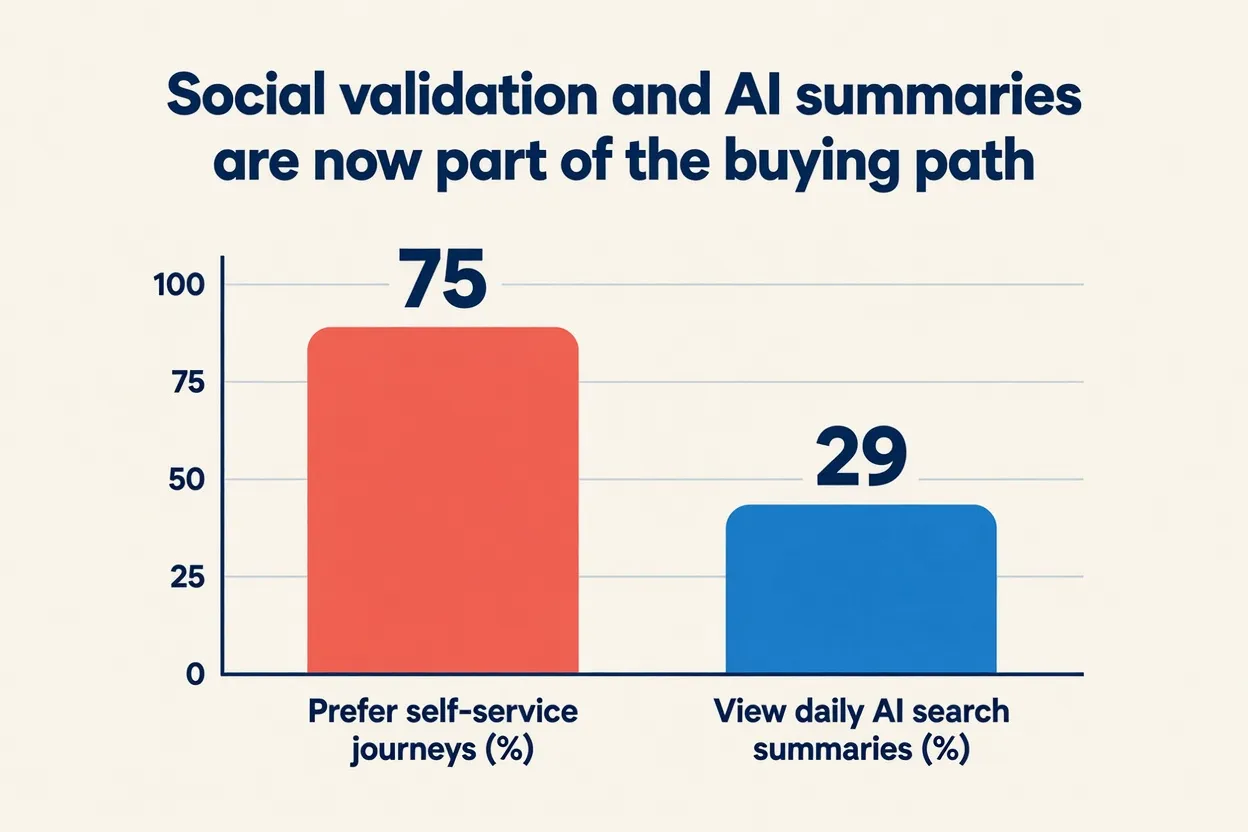
Buyers no longer use social only for discovery and search only for comparison. They use both to test whether your claims repeat consistently across the market.
Forrester’s buyer research, based on more than 17,000 buyers, places social at the center of B2B validation, which gives paid social a larger role than awareness alone.³ At the same time, Deloitte’s AI search signal means campaign optimization now has to support not just clicks, but also citation-style visibility inside AI-shaped search experiences.⁴
How to prioritize the network without spreading thin
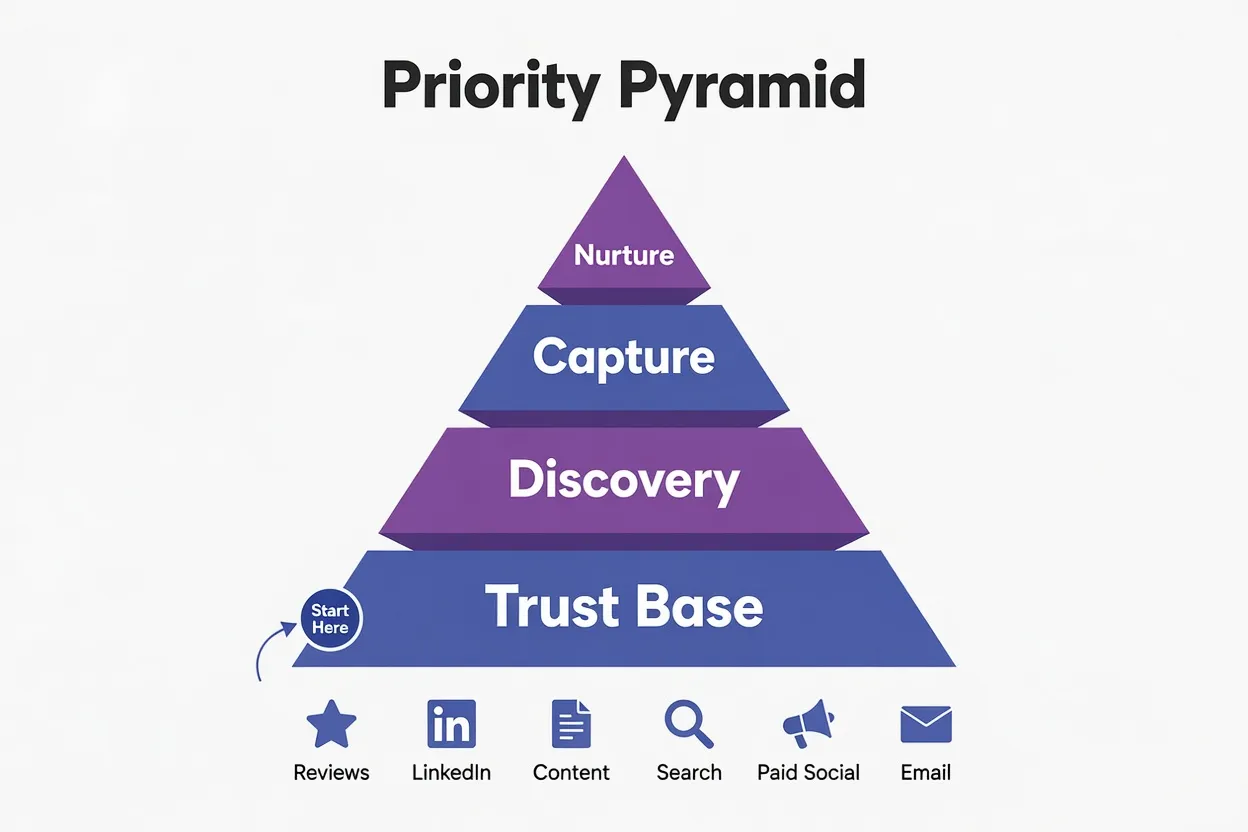
You do not need to be everywhere. You need to connect the places buyers use to find you with the places they use to trust you.
Start with four must-have nodes: review coverage, a credible LinkedIn presence, searchable owned content, and a conversion-ready website. Then layer in paid search marketing, paid social, email, and partner visibility based on budget, motion, and team capacity.
HubSpot reports that paid social remains one of the top ROI channels for B2B brands, and its State of Marketing research confirms that social and digital channels remain central to growth strategy.⁷ ⁸ That is the practical takeaway: focus your digital campaign where trust compounds fastest.
Conclusion
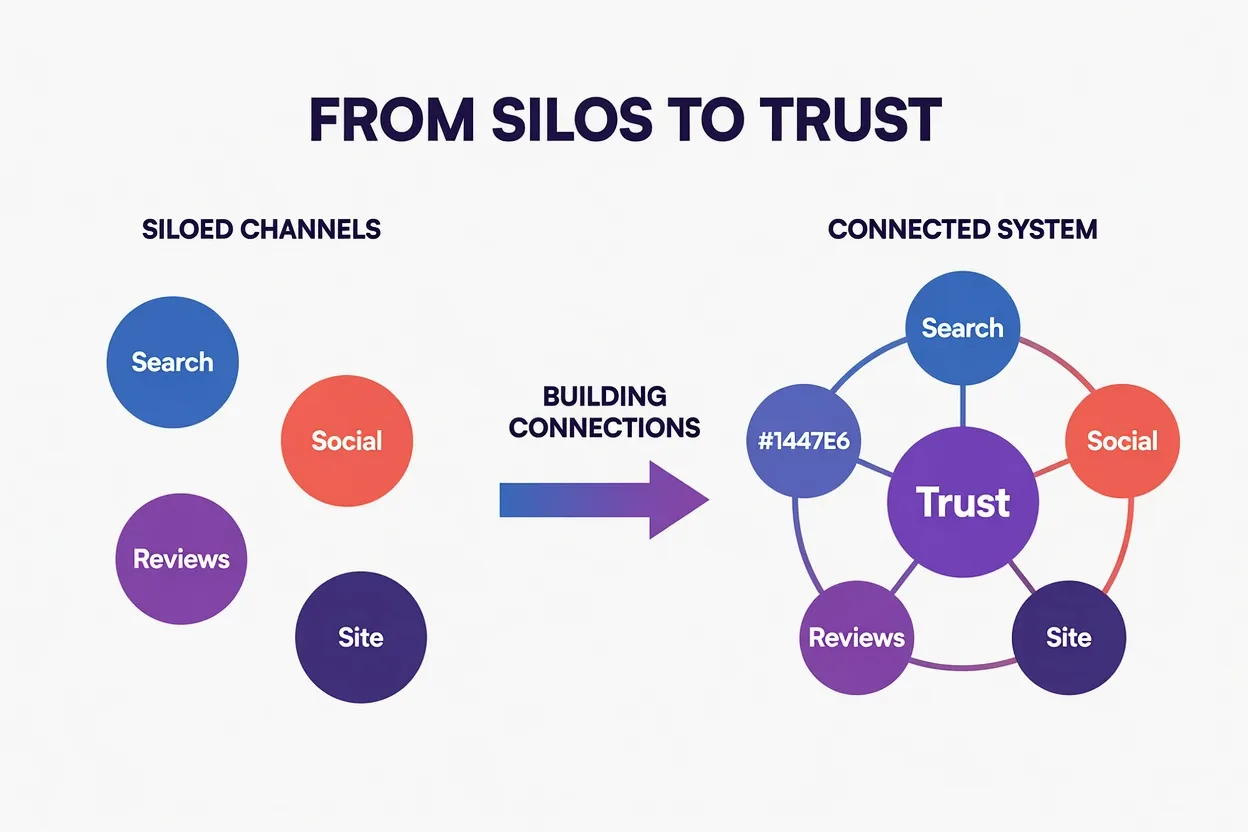
The main shift is simple. Channels still work, but buyers do not experience them as separate channels anymore.
They experience a trust network. McKinsey’s finding that buyers now use ten channels on average should change how B2B SaaS teams plan, measure, and optimize growth.¹ Review sites still matter, but they are only one layer. Social now shapes validation, search is becoming partly AI-mediated, and owned content must bridge both discovery and proof.³ ⁴ ⁵
That means the strongest growth teams will stop asking which single channel deserves more budget and start asking where trust breaks between touchpoints. In practice, that means aligning paid social, paid search marketing, reviews, website content, and nurture into one coordinated system instead of five disconnected programs.
For Scout7 readers, the next move is concrete: map your last five closed-won deals against the trust nodes they actually touched, then find the missing links in your journey. The brands that win in 2026 will not just run better campaigns. They will make discovery and validation feel seamless wherever buyers look next.
¹ McKinsey, "The surprising economics of B2B growth" ² Gartner, "The B2B Buying Journey" ³ Forrester, "Social Media Takes Center Stage In B2B Buying, Even In The AI Era" ⁴ Deloitte, "Deloitte 2026 TMT Predictions" ⁵ TrustSignals, "The Top 12 B2B Software Review Sites 2026" ⁶ Gartner, "Market Guide for Voice of the Customer Platforms" ⁷ HubSpot, "Marketing Statistics" ⁸ HubSpot, "State of Marketing"
References
- McKinsey’s 2026 Global B2B Pulse Survey found B2B buyers now use an average of ten channels across t...
- Gartner says 75% of B2B buyers increasingly prefer self-service digital journeys.
- Forrester’s 2026 buyer research says social media now sits at the center of B2B buying and vendor va...
- Deloitte’s 2026 TMT Predictions says 29% of adults in developed countries will view at least one AI-...
- B2B review-platform presence matters because 78% of buyers increasingly rely on customer reviews as ...
- The 2026 software-review landscape is being reshaped by consolidation, so G2, Capterra, Software Adv...
- HubSpot’s 2026 marketing report shows paid social remains one of the top ROI channels for B2B brands...
- HubSpot’s 2026 State of Marketing report confirms social and digital channels remain central to B2B ...